

STEM Starts Early: Why Play Matters
Many people think STEM subjects like science, technology, engineering, and mathematics are only for older students. However, the groundwork for these fields is built much earlier, in childhood. Play is a powerful tool for developing the cognitive skills needed for STEM learning.
Board games encourage curiosity, problem-solving, and an understanding of how things work. They equip children with a way of thinking that embraces challenges, encourages experimentation, and values logical reasoning – skills beneficial in any pursuit.
Learning through play feels natural and enjoyable. Engaged children absorb information and develop a lasting love of learning, a welcome alternative to rote memorization and standardized tests. The right games can spark discovery and encourage a lifelong interest in STEM.
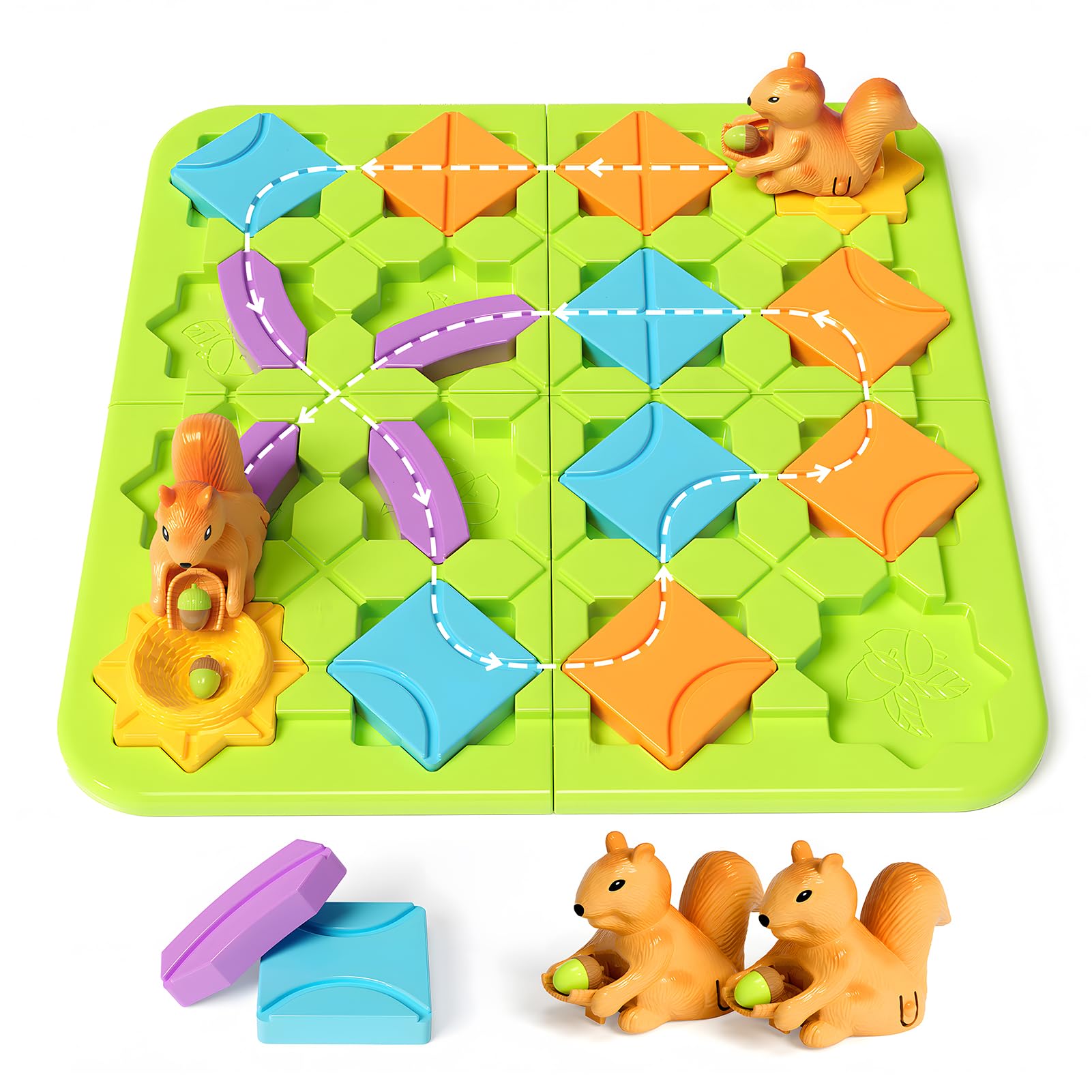
The Top 15 STEM Board Games for Kids (2026)
The board game market offers a growing selection of games designed to make STEM learning fun and accessible. Here are 15 educational board games for kids, covering a range of ages and skill levels. These games actively build STEM skills through gameplay.
- Robot Turtles (ages 3+): Introduces programming concepts like sequencing and debugging. Players use cards to guide their turtle, a first step towards computational thinking.
- Prime Climb (ages 8+): Players use addition, subtraction, multiplication, and division to move pawns, reinforcing number theory and arithmetic skills.
- Pandemic (ages 10+): A cooperative game where players work together to stop diseases. Fosters strategic thinking, problem-solving, and communication skills. Introduces complex systems and collaboration.
- Ticket to Ride: First Journey (ages 6+): A simplified version introducing geography, planning, and route-building. Players collect train cars and claim routes, developing spatial reasoning and strategic thinking.
- Blokus (ages 7+): Players fit Tetris-like pieces onto the board. Encourages strategic thinking, geometric understanding, and visual perception.
- Rush Hour (ages 8+): A single-player logic puzzle where players slide cars and trucks to clear a path for the red car. Develops critical thinking, problem-solving, and spatial reasoning skills.
- Gravity Maze (ages 8+): Players build pathways using towers and balls, utilizing physics and engineering principles. Explores gravity, momentum, and spatial reasoning.
- Code & Go Robot Mouse Activity Set (ages 5+): Kids program a robotic mouse to navigate a maze, teaching sequencing and problem-solving.
- DragonWood (ages 8+): Players roll dice to claim spaces and build paths, utilizing probability and math skills to strategically defeat monsters. It's a surprisingly engaging way to practice arithmetic.
- Photosynthesis (ages 8+): A beautiful and strategic game about growing trees. Players collect sunlight and use it to grow their trees, learning about the life cycle of plants and strategic resource management.
- Circuit Maze (ages 10+): This game involves building real circuits to light up different sections of the board. It's a fantastic introduction to electrical engineering and logical thinking.
- Laser Maze Jr. (ages 8+): Players use mirrors and lasers to direct a beam to a target, developing spatial reasoning and problem-solving skills. It’s a hands-on way to explore the principles of optics.
- Professor Noggin’s Card Games (ages 6+): A series of trivia-based card games covering a wide range of STEM topics, from dinosaurs to space. They’re a fun way to expand knowledge and encourage curiosity.
- Trekking the National Parks (ages 10+): Players collect park cards and complete trails, learning about US national parks and geography. It encourages strategic planning and geographic awareness.
- Bugs in the System (ages 8+): Players write code to debug a system overrun with bugs. It’s a playful introduction to coding concepts like loops and conditional statements.
Featured Products

Cooperative deduction game for preschoolers · Players work together to identify the culprit · Encourages observation and deduction skills
Outfoxed! introduces young children to deductive reasoning in a fun, cooperative format.

Teaches multiplication and division through colorful gameplay · Players climb a number ladder using mathematical operations · Builds number sense and strategic thinking
Prime Climb makes learning multiplication and division visually engaging and accessible for young mathematicians.

Screen-free robotics kit for introducing coding concepts · Children program a robot mouse to navigate a maze · Develops sequencing, critical thinking, and problem-solving skills
The Code & Go Robot Mouse Activity Set provides a hands-on introduction to coding and robotics without screens.

Logic game combining a marble run and a puzzle · Players build a maze to guide a marble to a target · Develops spatial reasoning, planning, and problem-solving skills
Gravity Maze challenges players to think critically and spatially as they design a path for the marble.
As an Amazon Associate I earn from qualifying purchases. Prices may vary.
Coding Concepts Without a Computer
Many parents worry about screen time, and for good reason. But you don’t need a computer to introduce your child to the fundamentals of coding. Several board games excel at teaching coding concepts in a tangible, screen-free way. Robot Turtles is a standout, explicitly designed to teach sequencing and debugging to very young children.
Similarly, Code & Go Robot Mouse allows kids to physically program a mouse to navigate a maze, reinforcing the idea of giving a series of instructions to achieve a goal. Bugs in the System presents coding challenges as debugging problems, making the abstract concept of code errors more relatable. These games aren't just about learning commands; they're about developing the logical thinking and problem-solving skills that are essential for coding and beyond.
The benefit of these approaches is that children can grasp the core concepts without the distractions of a screen. They're manipulating physical pieces, visualizing the flow of instructions, and learning from their mistakes in a concrete way. This builds a strong foundation for future coding endeavors and fosters a deeper understanding of computational thinking.
Building & Engineering: Hands-On Learning
Engineering isn’t just about constructing bridges and buildings; it’s about problem-solving, creativity, and understanding how things work. Several games encourage these skills through hands-on building and design. Gravity Maze is a fantastic example, challenging players to build pathways using towers and balls, emphasizing spatial reasoning and physics concepts.
Laser Maze Jr. is another standout, requiring players to strategically position mirrors to direct a laser beam – a practical application of optics and spatial awareness. Circuit Maze takes this a step further, letting kids build actual circuits to solve puzzles. These games aren’t about following instructions; they’re about experimenting, iterating, and finding creative solutions to challenges.
By engaging with these games, children learn to visualize 3D structures, understand basic physics principles, and develop a sense of how different components interact. This fosters a spirit of experimentation and encourages them to think outside the box.
Math & Logic: Beyond the Textbook
Math often suffers from a bad reputation, but it doesn’t have to be a source of anxiety. Board games can make math fun and engaging by applying mathematical concepts to solve problems. Prime Climb is a brilliant example, turning number theory into a competitive race. DragonWood similarly integrates math skills into a monster-battling adventure.
These games aren’t about memorizing formulas; they’re about developing number sense, strategic thinking, and pattern recognition. They show children the practical applications of math in a real-world context. Even Ticket to Ride: First Journey, while seemingly about trains, requires players to make calculations and plan routes efficiently.
By framing math as a tool for achieving a goal, these games can reduce math anxiety and build confidence. They demonstrate that math isn’t just about abstract concepts; it’s about solving problems and making informed decisions.
Games Worth a Closer Look
While the games listed above represent some of the best options available, there are a few other gems worth considering. Professor Noggin’s Card Games offer a surprisingly deep dive into various STEM topics, presented in a trivia format that’s engaging for older children. The series covers everything from dinosaurs to the human body.
Trekking the National Parks is a unique offering, combining geography, strategy, and a love of nature. It’s a great way to learn about US national parks while developing planning skills. These games may not be as widely known, but they offer a distinct and valuable learning experience.
OUTFOXED, A CLASSIC WHO DUNNIT GAME FOR PRESCHOOLERS, 4 players
- Cooperative gameplay encourages teamwork
- Introduces deductive reasoning and critical thinking
- Appeals to young detectives with a fun mystery theme
Outfoxed! is a fantastic cooperative mystery game that sharpens preschoolers' deductive reasoning skills, making it a perfect fit for introducing logical thinking in a fun, engaging way.
View on Amazon →As an Amazon Associate I earn from qualifying purchases.
Choosing the Right Game: Age & Skill
Age ranges on board games are guidelines, not strict rules. Every child develops at their own pace, and a game labeled for ages 8+ might be perfectly suitable for a bright 7-year-old. Consider your child’s interests and learning style when making a selection. A child who loves building might gravitate towards Gravity Maze, while a child who enjoys puzzles might prefer Rush Hour.
Before buying a game, ask yourself: Does this game align with my child’s interests? Is it challenging enough to be engaging, but not so difficult that it’s frustrating? Does it encourage collaboration or independent play, depending on my child’s preference? Here’s a quick checklist:
Consider the complexity of the rules. Is it something your child can grasp independently, or will they need your help? Think about the playtime. Shorter games are better for younger children with shorter attention spans.
- Does the game align with my child’s interests?
- Is the game challenging but not frustrating?
- What is the playtime?
- Can my child understand the rules?
No comments yet. Be the first to share your thoughts!