

Why stem play works
Most kids tune out when they hear a lecture about why science or math is important. It's better to just let them play. Board games take the pressure off and turn abstract concepts into something they can actually touch and move. We've found that when the stakes are just winning a game, kids take more risks with their problem-solving.
Traditional STEM education sometimes struggles to connect abstract concepts to real-world applications. It can feel disconnected, even for bright students. Board games bridge that gap. They present challenges that require problem-solving, critical thinking, and collaboration, all wrapped up in an engaging and enjoyable experience. This isn’t just about memorizing facts; it’s about doing science, engineering, and math.
Researchers at the MIT Education Arcade found that games work best when they aren't rigid. If you can change the rules or adapt the difficulty to fit your kid, the learning sticks. Board games are naturally flexible this way—you can house-rule them until they're exactly what your family needs.
Choosing the right games isn’t about finding the most educational option, but the one that sparks a child’s curiosity. A game that feels like play, but subtly reinforces STEM concepts, is far more likely to have a lasting impact. We need to move beyond rote learning and embrace methods that foster a genuine love of discovery. The games we select today are an investment in the problem-solvers and innovators of tomorrow.
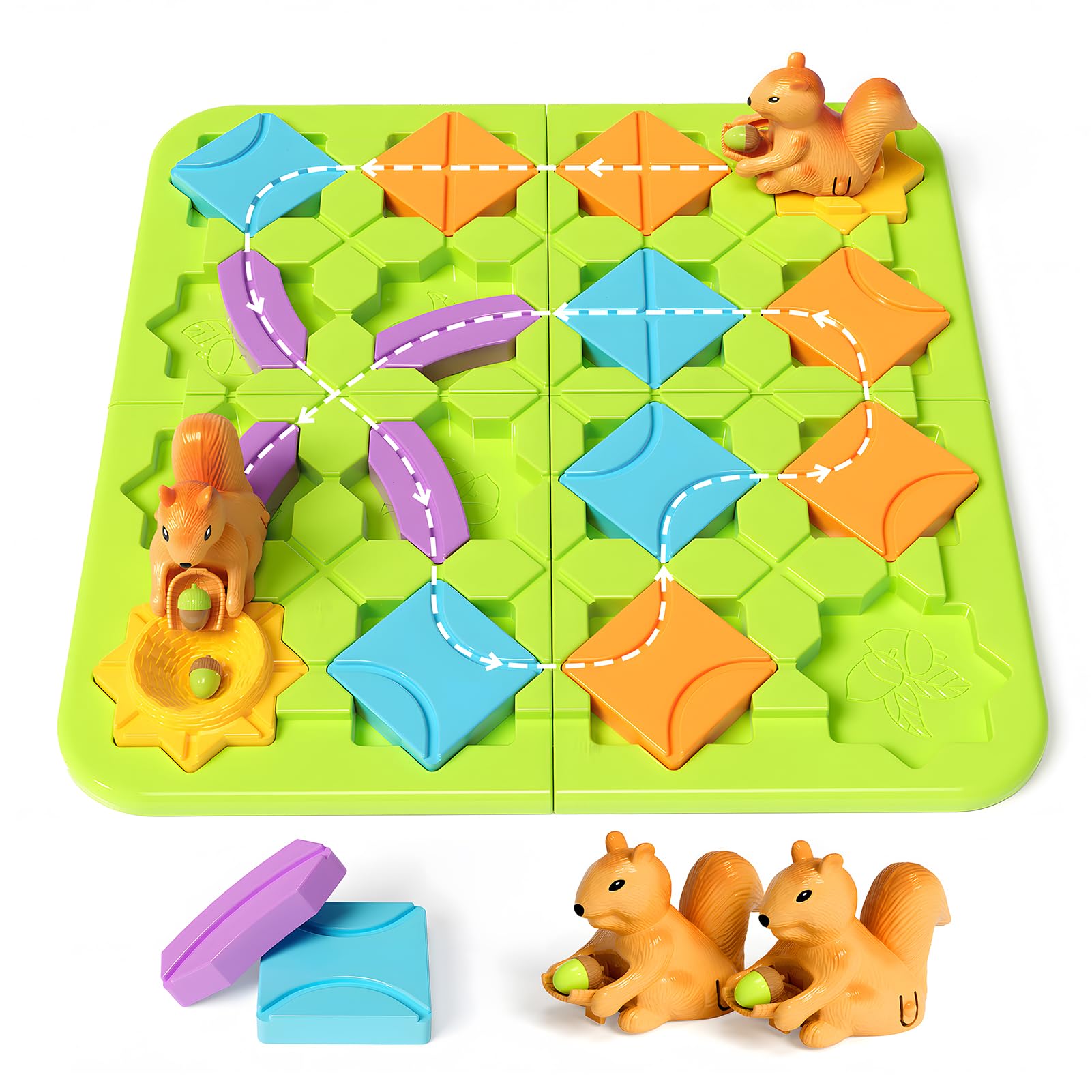
The best stem board games for 2026
Here’s a roundup of 15 exceptional STEM board games available in 2026, covering a range of ages and skill levels. I’ve tried to include games that genuinely integrate STEM principles into their gameplay, rather than just slapping a STEM label on a traditional game. Prices are approximate as of late 2025.
- Robot Turtles (Ages 3-8, $25). This is a simple way to teach coding without a screen. Kids use cards to move a turtle, which helps them understand sequencing and how to fix mistakes when things go wrong.
- Prime Climb (Ages 8+, Number Theory, Mathematical Operations, $35): Prime Climb cleverly uses number theory to create a surprisingly strategic game. Players move their pawns around the board using prime numbers and mathematical operations. It’s a fun way to practice arithmetic and develop strategic thinking. Pros: Deep gameplay, reinforces math skills. Cons: Can be challenging for kids new to number theory.
- Pandemic (Ages 13+, $40). You aren't playing against each other here; you're working together to stop a virus. It's a great way to see how diseases spread and why logistics matter in science.
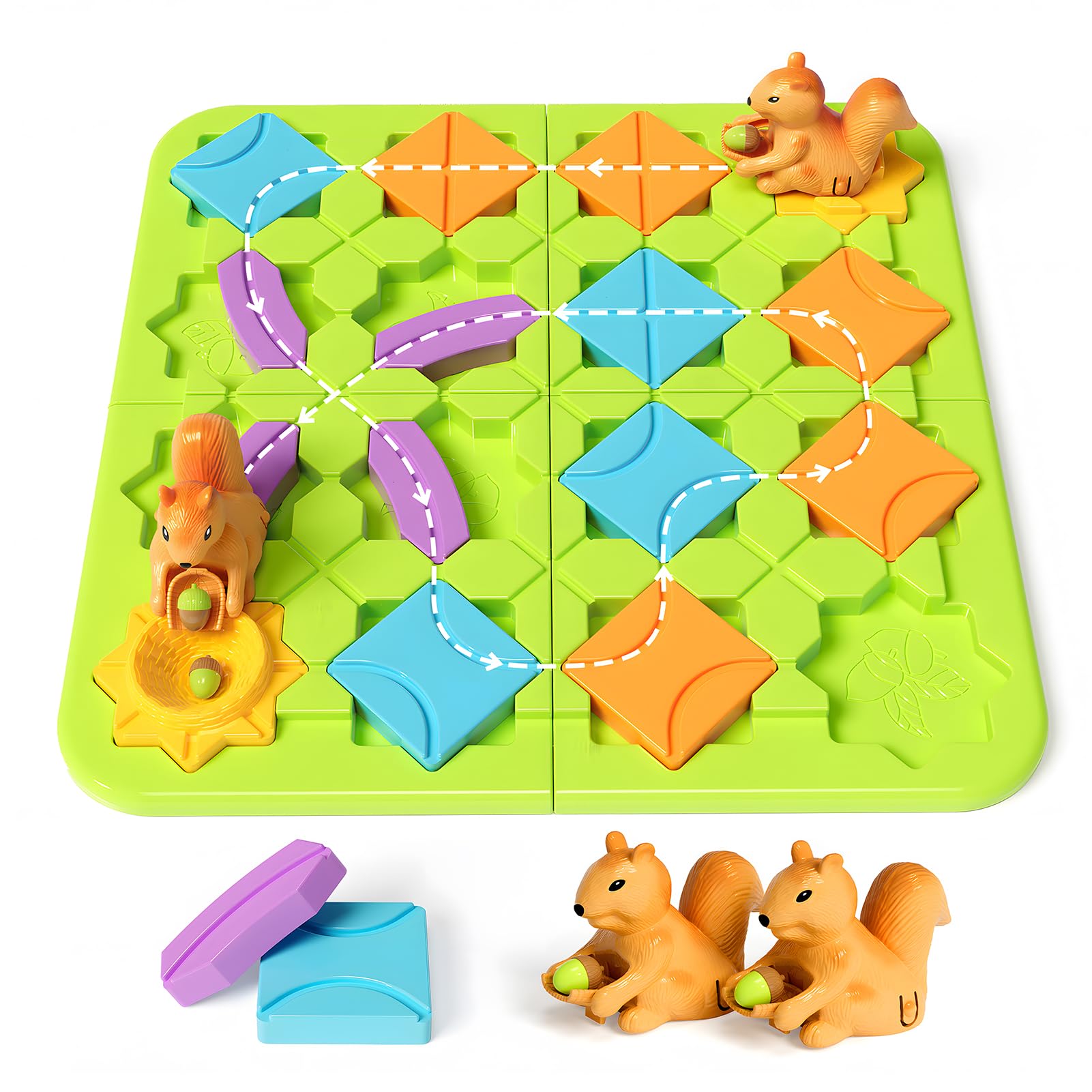
- Gravity Maze (Ages 8+, Physics, Spatial Reasoning, $30): This single-player puzzle game challenges players to build pathways using magnetic tiles, accounting for gravity and spatial relationships. It's a great way to develop problem-solving skills and an intuitive understanding of physics. Pros: Engaging, develops spatial reasoning. Cons: Can be frustrating for some.
- Code & Go Robot Mouse Activity Set (Ages 5-8, Basic Coding Concepts, $40): Players program a robotic mouse to navigate a maze using coding cards. It’s a hands-on way to learn sequencing, loops, and conditional statements. Pros: Interactive, tactile learning. Cons: Requires some setup.
- Circuit Maze (Ages 8+, Electrical Engineering, Circuit Building, $50): Players build electrical circuits using real circuit components to power different parts of a game board. It teaches the basics of electricity and circuit design in a safe and engaging way. Pros: Hands-on, practical STEM learning. Cons: Can be expensive.
- Evolution: Climate (Ages 12+, Biology, Adaptation Mechanics, $60): This strategy game simulates the process of evolution, where players adapt their species to survive changing environmental conditions. It’s a complex game that requires strategic thinking and an understanding of biological principles. Pros: Deep strategy, realistic simulation. Cons: Complex rules, long playtime.
- Math Dice Jr. (Ages 6-8, Mental Math, Number Recognition, $20): A fast-paced game that challenges players to use dice to create number sentences. It’s a fun way to practice mental math and build number sense. Pros: Quick, engaging, reinforces math facts. Cons: Can be repetitive.
- Kerplunk Engineers (Ages 5-9, Structural Engineering, Problem Solving, $25): A twist on the classic Kerplunk game, this version requires players to strategically remove sticks while trying to keep the marbles from falling. It teaches basic principles of structural engineering and problem-solving. Pros: Familiar gameplay, introduces engineering concepts. Cons: Can be a bit messy.
- Photosynthesis (Ages 8+, Biology, Strategic Planning, $45): Players grow trees and compete for sunlight, demonstrating the process of photosynthesis and the importance of resource management. Pros: Beautiful components, strategic depth. Cons: Can be abstract.
- Subatomic: An Atomic Building Game (Ages 10+, Chemistry, Strategy, $30): Players build atoms and molecules by collecting and combining element tiles. It’s a fun way to learn about the building blocks of matter. Pros: Educational, strategic. Cons: Requires some prior knowledge of chemistry.
- Space Explorers (Ages 10+, Space Science, Resource Management, $50): Players manage resources and launch rockets to explore space. It’s a game about planning, efficiency, and the challenges of space travel. Pros: Engaging theme, strategic depth. Cons: Can be complex.
- Terraforming Mars: Ares Expedition (Ages 12+, Environmental Science, Strategic Planning, $60): A streamlined version of the popular Terraforming Mars game, where players work to make Mars habitable. It teaches about environmental science and the challenges of planetary engineering. Pros: Strategic depth, engaging theme. Cons: Can be long and complex.
- Gizmos (Ages 8+, Engineering, Chain Reactions, $40): Players build a chain reaction of gizmos to score points. It’s a fun way to learn about engineering principles and cause-and-effect relationships. Pros: Engaging gameplay, strategic depth. Cons: Can be a bit abstract.
- Dragon Scale (Ages 8+, Resource Management, Geometry, $30): Players collect and trade dragon scales of different shapes and colors. It subtly reinforces geometric concepts and resource management skills. Pros: Beautiful components, strategic depth. Cons: Can be a bit abstract.
Featured Products

Cooperative deduction game · Encourages critical thinking and deduction skills · Designed for 4 players, ages 4 and up
Outfoxed! introduces young children to deductive reasoning in a fun, cooperative format, making it an excellent early STEM learning tool.

Explores number bonds and multiplication · Visually engaging and colorful board · Suitable for ages 8 and up
Prime Climb offers a unique and intuitive way for kids to grasp fundamental math concepts like multiplication and number bonds through strategic gameplay.

Introduces basic coding and sequencing concepts · Screen-free, hands-on robotic activity · Includes a programmable mouse and maze pieces
The Code & Go Robot Mouse Activity Set provides a tangible and engaging introduction to robotics and coding principles without the need for screens.

Combines logic and spatial reasoning · Features a gravity-powered marble maze · Challenges players with 60 different puzzles
Gravity Maze is a fantastic game for developing critical thinking and problem-solving skills as players build a maze to guide a marble to its target.

Teaches basic electronic circuit principles · Offers a hands-on, puzzle-based approach to learning · Includes 60 challenges ranging in difficulty
Circuit Maze provides an engaging and educational experience, allowing children to learn about electrical circuits by solving logic puzzles.
As an Amazon Associate I earn from qualifying purchases. Prices may vary.
How to adapt games for learning
The true potential of these games lies in their adaptability. The MIT Education Arcade’s emphasis on openness is key here. Don’t be afraid to modify the rules, create your own challenges, or use the games as a springboard for further exploration. For example, after playing Robot Turtles, you could encourage kids to create their own coding challenges using everyday objects.
Educators can incorporate these games into classroom activities. Pandemic can be used to teach about epidemiology and public health. Evolution: Climate can spark discussions about adaptation and environmental change. The goal is to connect the game to real-world concepts and encourage students to think critically. Extending gameplay by having kids design their own game variations is a great way to reinforce learning.
Choosing the right game for your family
Choosing the right game is a personal process. Consider your child’s age, interests, and learning style. A highly strategic game might be perfect for one child, while another might prefer a more hands-on, tactile experience. Don't force a game on a child who isn't enjoying it; that defeats the purpose of playful learning.
Think about family dynamics, too. Do you want a cooperative game that encourages teamwork, or a competitive game that fosters individual problem-solving? Ultimately, the best STEM board game is the one that sparks your child’s curiosity and makes learning fun.
- Age Appropriateness: Is the game's complexity suitable for your child’s age?
- Interests: Does the game's theme align with your child's passions?
- Learning Style: Does the game cater to your child's preferred learning method (visual, tactile, etc.)?
- Family Preference: Do you prefer cooperative or competitive gameplay?
No comments yet. Be the first to share your thoughts!