

AI is changing the tabletop
For decades, board games have been a cornerstone of social interaction and strategic thinking. But the experience has always been fundamentally…static. The rules are fixed, the components are unchanging, and your opponent is, well, human. Now, that’s beginning to shift. Artificial intelligence is making its way onto the tabletop, promising a new era of dynamic and adaptive gameplay.
Early attempts at board game AI were largely focused on simple automation – essentially, programming a computer to play a game according to the rules. These efforts were often clunky and lacked the nuance of a human player. They were more about solving the game than playing it. But advancements in machine learning, particularly in areas like reinforcement learning and neural networks, are changing everything.
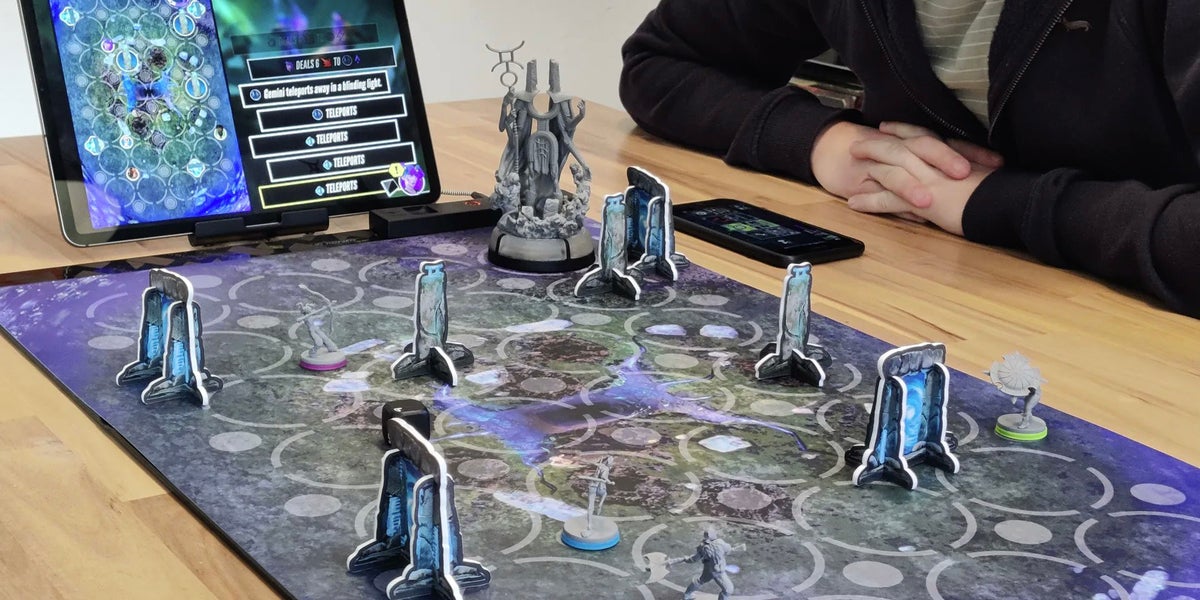
2026 is when the hardware finally caught up to the software. We have the processing power now to run complex neural networks on a phone or a small tabletop hub. It isn't just about replacing your friends with a bot; it's about adding layers to the game that a human judge or player couldn't track manually.
The move from automated rule enforcement to adaptive AI is what really excites me. Imagine a game that learns your strategies, anticipates your moves, and adjusts its difficulty on the fly. Or a game that generates unique scenarios based on your past performance. This isn’t science fiction anymore. It’s becoming a reality.
Ludomentor and the smarter opponent
One of the leading examples of AI-powered board game opponents is Ludomentor, an app available on the Google Play Store (play.google.com). Ludomentor isn’t trying to replicate the entire board game experience digitally; it focuses on providing a challenging and intelligent AI opponent for existing physical games. It currently supports a range of titles, including Terraforming Mars, Scythe, and Wingspan.
The core of Ludomentor’s AI lies in its use of machine learning algorithms. It doesn't just make legal moves; it evaluates potential moves based on a complex set of criteria, taking into account the current game state, your past actions, and the overall strategic goals. User reviews on the Google Play Store are generally positive, with many praising its challenging gameplay and ability to provide a worthy opponent, even for experienced players.
However, it’s not without its limitations. Ludomentor struggles with games that involve a significant amount of hidden information or complex social deduction. Games like Battlestar Galactica or The Resistance are particularly difficult for AI to handle effectively. The app also requires a subscription to access all games and features, which is currently priced at $9.99 per month or $79.99 per year.
I've been testing Ludomentor with Terraforming Mars, and I'm impressed with its strategic depth. It doesn't feel like it's making random choices; it genuinely seems to be trying to optimize its position and counter my strategies. But it occasionally makes moves that feel suboptimal, suggesting that it’s still a work in progress. The biggest challenge seems to be replicating the long-term planning and risk assessment that a human player brings to the table.
Games that learn how you play
Beyond simply offering different difficulty levels, some games are beginning to adapt to your play style in real-time. This is a more sophisticated approach that requires the game to analyze your behavior and adjust its parameters accordingly. The underlying principle is often reinforcement learning, where the AI receives feedback based on your actions and learns to optimize its own strategy.
For example, a game might track your preferred strategies, your risk tolerance, and your common mistakes. If you consistently favor aggressive tactics, the AI might become more defensive. If you struggle with resource management, it might provide you with subtle hints or adjust the availability of resources. The goal is to create a personalized experience that is challenging but not frustrating.
The user experience is crucial here. If the adaptation feels too obvious or unfair, it can ruin the immersion. The best implementations are subtle and intuitive, making it feel like the game is responding to your actions in a natural way. It’s a delicate balance, and it requires careful tuning and testing. I'm not sure we've seen a truly flawless example of this yet.
One of the key challenges is determining how to measure player skill and adapt the game accordingly. Simple metrics like win rate aren’t sufficient. The game needs to understand why you’re winning or losing, and what factors are contributing to your success or failure.
What's Your Board Game Playstyle?
AI is revolutionizing board games, creating experiences that adapt to *you*. But which of these smart tabletop games will best suit your natural playstyle? Take this quick quiz to find out! Your answers will help us recommend AI-enhanced games launching in 2026 that will truly challenge and delight.
Building your own smart games
Gamefroot (make.gamefroot.com) takes a different approach to AI in board games. Instead of focusing on AI opponents or adaptive difficulty, Gamefroot empowers players to create their own AI-enhanced board game experiences. It’s a game creation platform that allows users to design and share their own games, animations, and stories.
Gamefroot is lowering the barrier to entry for game design by providing a visual, drag-and-drop interface. You don’t need to be a programmer to create a functional board game. The platform also offers a library of pre-made assets and tools, making it easier to get started. This democratizes game development and opens up new possibilities for user-generated content.
The potential for AI to assist in game design is also significant. AI could be used to generate scenarios, balance gameplay, or even create artwork and music. Imagine being able to tell an AI, “Create a fantasy board game with a focus on resource management and exploration,” and having it generate a playable prototype in minutes. That’s the promise of AI-assisted game design.
What's particularly exciting is the potential for community-driven innovation. With Gamefroot, players can share their creations with others, collaborate on projects, and learn from each other. This creates a virtuous cycle of creativity and experimentation, pushing the boundaries of what’s possible in board game design. It’s a little early to say how impactful Gamefroot will be, but it’s a platform to watch.
Five AI games to watch in 2026
Pinpointing just five is tough, as the field is rapidly evolving, but here are five games that stand out in 2026 for their innovative use of AI. Keep in mind some are still in development, but show great promise.
1. Sentient Settlers: A digital adaptation of Catan that features an AI opponent that learns your trading patterns and building preferences. It doesn’t just play optimally; it tries to predict your moves and exploit your weaknesses. Available on Steam for $29.99.
2. Chronicle of Echoes: A narrative board game where the AI acts as a dynamic storyteller, adapting the plot based on your choices and actions. Each playthrough is unique, offering a truly emergent narrative experience. Currently in Kickstarter funding, estimated release Q4 2026.
3. AI Dungeon Master: While not a traditional board game, this platform allows you to play tabletop RPGs with an AI Dungeon Master. The AI generates the world, characters, and plot on the fly, creating an infinitely replayable adventure. Subscription based - $15/month.
4. Neuroshima Hex: Evolved: A tactical wargame where the AI opponent analyzes your army composition and adjusts its strategy accordingly. It’s a challenging and rewarding experience for experienced wargamers. Available on BoardGameArena for a premium subscription.
5. Aurora: The AI Planet: A cooperative game where players must work together to terraform a hostile planet. The AI controls the planet’s environment, throwing unexpected challenges your way. It’s a test of teamwork and strategic planning. Currently in beta testing.
Featured Products

AI-powered referee for instant rule enforcement and gameplay analysis · 3D board offers a unique visual and strategic dimension · Adapts gameplay for solo or two-player modes
This AI-enhanced board game offers dynamic gameplay that adapts to player skill, providing a fresh and engaging experience for every session.

Oversized wooden pieces for easy handling · Includes matching and puzzle templates for cognitive engagement · Serves as an engaging table decor piece
This AI-enhanced board game offers dynamic gameplay that adapts to player skill, providing a fresh and engaging experience for every session.

Cooperative, story-driven gameplay · Based on the popular Mass Effect universe · Offers strategic decision-making for 1-4 players
This AI-enhanced board game offers dynamic gameplay that adapts to player skill, providing a fresh and engaging experience for every session.

Family-friendly trivia game designed for multiple generations · Focuses on shared memories and common knowledge · Promotes intergenerational interaction and fun
This AI-enhanced board game offers dynamic gameplay that adapts to player skill, providing a fresh and engaging experience for every session.

These AI-enhanced board games offer dynamic gameplay that adapts to player skill, providing a fresh and engaging experience for every session.
As an Amazon Associate I earn from qualifying purchases. Prices may vary.
The downsides of digital rules
Despite the exciting potential, there are also challenges and considerations to keep in mind. One concern is fairness. If the AI is too powerful or predictable, it can ruin the experience for human players. Ensuring that the AI is balanced and transparent is crucial.
Another concern is the loss of human interaction. Board games are often a social activity, and replacing human opponents with AI could diminish that aspect. It’s important to find ways to integrate AI into the experience without sacrificing the social element.
There are also ethical implications to consider. If AI is used to manipulate players or exploit their vulnerabilities, that could raise serious concerns. Developers need to be mindful of the potential downsides and prioritize responsible AI development.
Accessibility is another important factor. AI-enhanced board games should be designed to be accessible to players of all skill levels and abilities. It’s important to avoid creating games that are too complex or intimidating for newcomers. AI isn’t a panacea, and it’s not always the right choice. But when used thoughtfully and responsibly, it has the potential to transform the world of board games.

No comments yet. Be the first to share your thoughts!