

STEM Skills Bloom: Why Play Matters
STEM subjects—science, technology, engineering, and mathematics—are often taught through textbooks and lectures. However, play can be a highly effective way for children to learn STEM concepts. Board games, for instance, provide an engaging method for kids to develop critical thinking, problem-solving skills, and an interest in these fields.
Board games make learning enjoyable by presenting challenges in a fun context, encouraging active participation and experimentation. Children learn to strategize, analyze situations, and adapt—skills valuable in STEM careers and life. The focus is on discovery, not just memorization.
Demand for STEM professionals is increasing. The U.S. Bureau of Labor Statistics projects STEM occupations will grow 10.8 percent from 2022 to 2032, faster than the average for all occupations (3.2 percent). Early exposure to STEM concepts can spark a lifelong passion and prepare children for future opportunities. Games offer this initial spark without the pressure of formal education.
Board games also nurture essential soft skills like collaboration, communication, and negotiation. Employers consistently seek these qualities, and games offer a safe space for children to practice them.
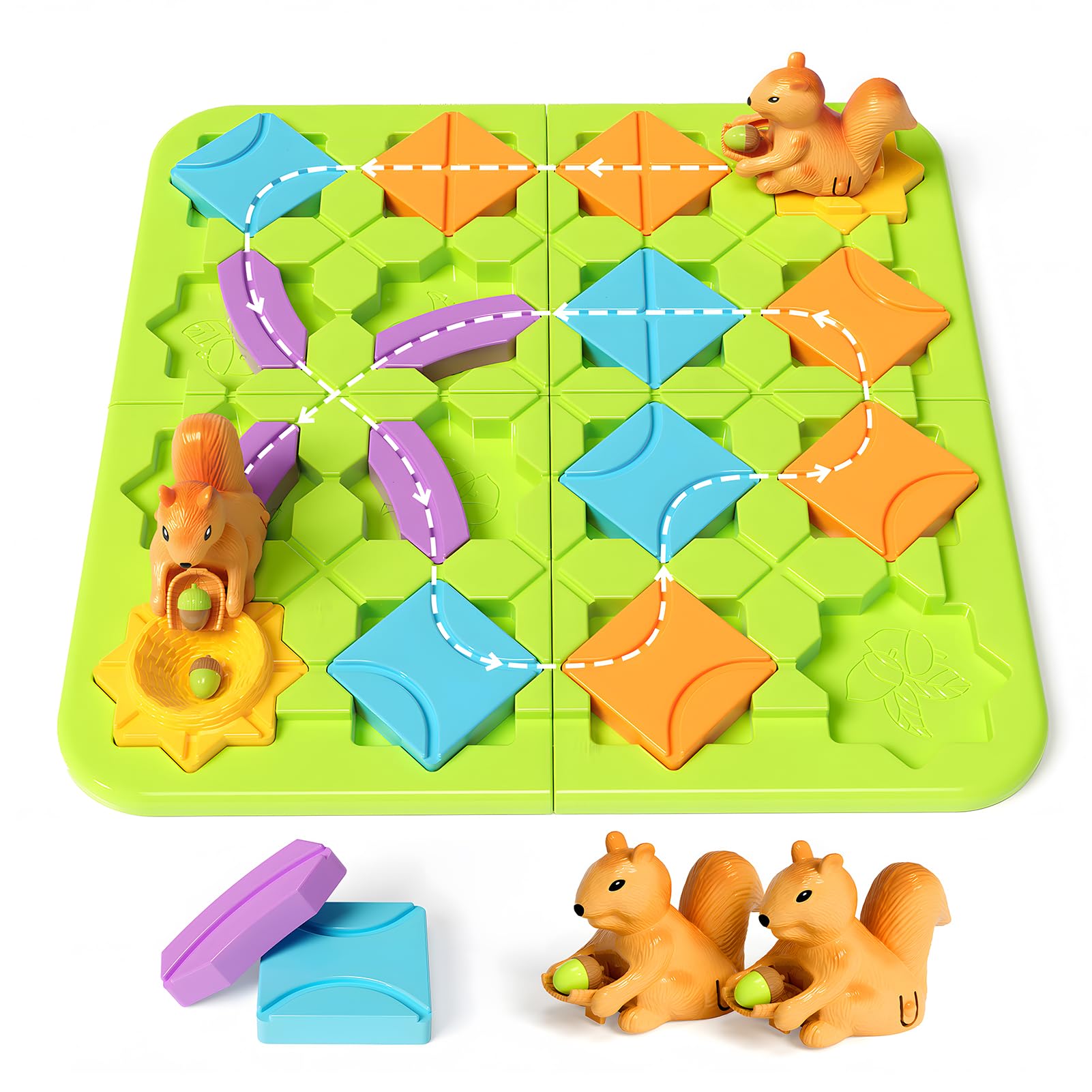
Top 15 STEM Board Games for Kids (2026)
Choosing the right board game depends on a child's age, interests, and skill level. This list offers a variety of options. Prices can fluctuate, but approximate ranges are based on market values as of late 2024.
1. Robot Turtles (Ages 3-8): This game is a fantastic introduction to the fundamentals of coding. Players write 'code' by placing cards to guide their turtle robot around the board. It teaches sequencing and algorithmic thinking in a playful way. Expect to pay around $30.
2. ThinkFun Gravity Maze (Ages 8+): A single-player puzzle game that challenges kids to build pathways using gravity. It’s excellent for developing spatial reasoning, problem-solving, and critical thinking. It’s usually around $35.
3. Prime Climb (Ages 10+): This visually striking game uses colorful pawns and a unique board to teach mathematical concepts like addition, subtraction, multiplication, and division. It’s a surprisingly engaging way to practice arithmetic. Costs approximately $40.
4. Pandemic (Ages 8+): A cooperative game where players work together to stop the spread of diseases. It fosters strategic thinking, planning, and collaboration. It's a bit more complex, but a great introduction to cooperative gameplay, around $45.
5. Code & Go Robot Mouse Activity Set (Ages 4-9): Kids program a robotic mouse to navigate a maze. It introduces coding concepts like sequencing and debugging in a hands-on way. This set usually costs around $40.
6. Rush Hour Logic Game (Ages 8+): A sliding block puzzle that challenges players to free a red car from a traffic jam. It develops logical thinking, problem-solving, and spatial reasoning. A good value at around $30.
7. Blokus (Ages 7+): A strategy game where players try to fit all their Tetris-like pieces onto the board. It enhances spatial reasoning, planning, and strategic thinking. Typically priced around $25.
8. Set Card Game (Ages 6+): A fast-paced game of pattern recognition. Players race to identify 'sets' of cards based on color, shape, shading, and number. It improves visual perception and quick thinking, around $15.
9. Ticket to Ride First Journey (Ages 6+): A simplified version of the popular Ticket to Ride game, perfect for younger players. It introduces basic geography, route planning, and strategic thinking. Usually around $35.
10. Azul (Ages 8+): A beautiful abstract strategy game where players collect tiles to decorate a palace wall. It develops spatial reasoning, pattern recognition, and planning skills. A bit more expensive, around $40.
11. Photosynthesis (Ages 8+): Players cultivate trees, strategically positioning them to capture sunlight and grow. It’s a clever way to learn about biology and resource management. Costs approximately $50.
12. Circuit Maze (Ages 10+): This game uses real circuits to create pathways for electricity. It’s a hands-on way to learn about electrical engineering and problem-solving. Around $50.
13. Professor Noggin's Card Games (Various Ages): A series of trivia card games covering various STEM topics like dinosaurs, space, and the human body. Great for reinforcing knowledge and sparking curiosity, typically $10-20 per deck.
14. Castle Logix (Ages 5+): This single-player puzzle challenges kids to build castles according to specific blueprints. It develops spatial reasoning, problem-solving, and fine motor skills. Usually around $25.
15. Space Escape Maze (Ages 6+): Players navigate a maze, collecting oxygen and avoiding obstacles to escape a spaceship. It encourages problem-solving, spatial reasoning, and strategic thinking. Costs about $20.
Featured Products

Engaging robot building competition · Ages 5 and up · Learn skills while collecting tools and parts
This game offers a fun, hands-on way for children to develop critical STEM skills by racing to collect matching tools and parts for robot building.

Falling marble logic game · Ages 8-12 · Boosts critical thinking and problem-solving skills
This challenging STEM toy provides a fun, hands-on way for children to develop critical thinking and problem-solving skills through a gravity marble maze.

Focuses on mathematical concepts · Engaging gameplay · Develops number sense and strategic thinking
This highly-rated educational board game offers a fun, hands-on way for children to develop critical STEM skills, making learning math an exciting adventure.

Robotics kit for kids · Screen-free coding activities · Develops engineering and problem-solving skills
This robotics kit offers a fun, hands-on way for children to develop critical STEM skills through screen-free coding and engineering challenges.

Traffic jam logic game · Ages 8 and up · Enhances reasoning and planning skills
This engaging STEM toy offers a fun, hands-on way for children to develop critical reasoning and planning skills through a challenging traffic jam logic puzzle.
As an Amazon Associate I earn from qualifying purchases. Prices may vary.
Early Learners: Games for Preschool & Kindergarten
For the youngest learners, the focus should be on games that introduce foundational STEM concepts in a playful and accessible way. It’s less about complex rules and more about exploring shapes, colors, counting, and basic problem-solving.
Robot Turtles is an excellent starting point, as mentioned earlier. The simple act of programming the turtle with code cards helps children understand the concept of sequencing without requiring any prior coding knowledge. Parents can easily adapt the game by creating more complex mazes or adding new challenges.
Castle Logix is another great option for this age group. Building the castles according to the blueprints helps develop spatial reasoning and fine motor skills. Parents can encourage children to experiment with different building techniques and create their own designs.
Professor Noggin’s series, especially the animal or nature decks, can introduce basic biological concepts in a fun and engaging way. The question-and-answer format encourages curiosity and reinforces learning. Remember to keep these sessions short and interactive, focusing on exploration rather than memorization.
Building & Engineering: Spatial Reasoning Games
Games emphasizing building and engineering principles develop spatial reasoning skills—the ability to visualize and manipulate objects in three dimensions. These skills are important for careers in architecture, engineering, and design.
ThinkFun Gravity Maze stands out in this category. The challenge of building pathways for the marble requires careful planning and an understanding of gravity. It’s a great way to encourage problem-solving and spatial thinking. The game's increasing difficulty provides a continuous challenge.
Blokus also promotes spatial reasoning, but in a more competitive setting. Players must strategically place their pieces on the board, maximizing their space and blocking their opponents. It's a game that rewards foresight and careful planning. It’s surprisingly addictive!
Castle Logix fits here too, acting as a more tactile and accessible introduction to engineering concepts. The process of following blueprints and assembling structures helps children understand the principles of design and construction. The physical act of building is incredibly satisfying.
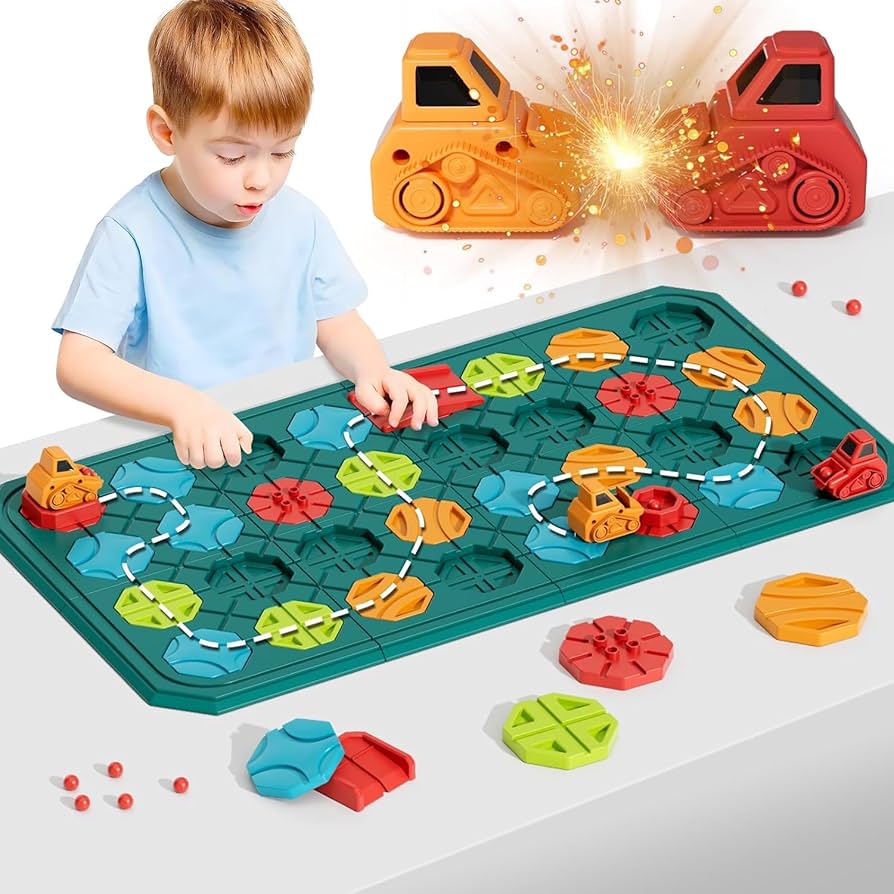
Math & Logic: Number Sense & Strategy
Board games can make learning mathematical concepts fun and engaging. The key is to find games that integrate math into gameplay, rather than presenting it as a separate skill.
Prime Climb is a standout example. The game’s unique board and colorful pawns make learning arithmetic surprisingly enjoyable. Players practice addition, subtraction, multiplication, and division without even realizing they're doing math. It’s a clever design.
Set Card Game is a fast-paced game that challenges players to recognize patterns and identify sets of cards. It improves visual perception, quick thinking, and logical reasoning. It’s a great way to sharpen mental agility.
Even Ticket to Ride First Journey incorporates mathematical concepts, such as counting and route planning. Players must collect train cars and claim routes, requiring them to add up distances and strategize their moves. It’s a gentle introduction to strategic thinking.
Coding Concepts: Games That Teach Programming
Coding is an important skill in the 21st century. Board games can introduce fundamental coding concepts playfully and accessibly, focusing on computational thinking—the problem-solving process used by computer scientists.
Robot Turtles is a fantastic entry point. The game teaches sequencing and algorithmic thinking, the building blocks of coding, without requiring any actual programming knowledge. It’s a great way to spark an interest in coding.
Code & Go Robot Mouse Activity Set takes this a step further. Players program a robotic mouse to navigate a maze, learning about sequencing, loops, and debugging. It's a hands-on experience that makes coding concepts tangible.
These games lay the foundation for understanding the logic and problem-solving skills required for coding, potentially inspiring children to explore coding further.
STEM Skills Challenge: Test Your Coding Knowledge!
Many board games subtly introduce STEM concepts, and some focus on them directly! This quiz tests your understanding of foundational coding principles – sequencing, loops, and debugging – which are often fostered through games like Robot Turtles and Code & Go Robot Mouse. See how well you grasp these ideas!
Beyond the Box: Adapting Games & Extending Learning
Board games are adaptable. Modify rules or add challenges to suit a child's learning style and abilities. For younger children, simplify rules or focus on specific skills. For older children, increase difficulty or encourage them to create variations.
Extend learning beyond the game. After playing a game about animals, encourage research or drawing. After a building game, challenge them to build something similar using LEGOs or other materials.
Incorporate games into classroom activities or homeschooling curricula as a fun way to reinforce textbook concepts. The goal is to foster a love of learning, not just memorization.
Standout Games: Worth a Closer Look
From the list of 15, a few games really shine in their ability to blend entertainment with impactful STEM learning. ThinkFun Gravity Maze is one of those. It’s not just about solving puzzles; it’s about visualizing solutions in three dimensions, a skill that translates to engineering and architecture.
The game's modular design and increasing difficulty keep it engaging. Its single-player format suits children who prefer independent challenges. Solving a complex maze provides a sense of accomplishment.
Another standout is Prime Climb. It's a truly unique game that makes learning math genuinely fun. The visual representation of numbers and the strategic gameplay make arithmetic feel less like a chore and more like a puzzle. It’s a game that both kids and adults can enjoy. It's a great way to build number sense.

OUTFOXED, A CLASSIC WHO DUNNIT GAME FOR PRESCHOOLERS, 4 players
- Cooperative deduction game
- Encourages critical thinking and problem-solving
- Features a "whodunnit" mystery for preschoolers
Outfoxed! is a fantastic cooperative deduction game that introduces preschoolers to critical thinking and problem-solving skills in a fun, engaging way, making it a perfect fit for a STEM-focused board game list.
View on Amazon →As an Amazon Associate I earn from qualifying purchases.
No comments yet. Be the first to share your thoughts!