

Tabletop Gets a Brain
A frustrating game of Twilight Imperium a few years back, eight hours in, saw a critical miscalculation stemming from a complex rules interaction completely derail strategy. It wasn’t a lack of effort, but a simple human error in a game with an intimidating rulebook. What if a game could just… know the rules? That’s the promise of AI in board games, and it’s starting to become a reality.
For years, "smart" board games meant electronic versions – Monopoly on a handheld, or Chess with a computer opponent. These were fun, but they didn't capture the tactile joy of physical components. More recent attempts focused on simple automation – a digital dice roller, or an app that tracked scores. Those felt more like accessories than true integration. Advances in machine learning and natural language processing are opening up entirely new possibilities.
The change enhances the tabletop experience. AI handles complex calculations, enforces rules consistently, and creates dynamic, personalized game experiences. It removes friction, letting players focus on strategy, storytelling, and social interaction. Development is ongoing, and the technology isn’t perfect, but board games are getting smarter.
Ludomentor and the Rise of AI Opponents
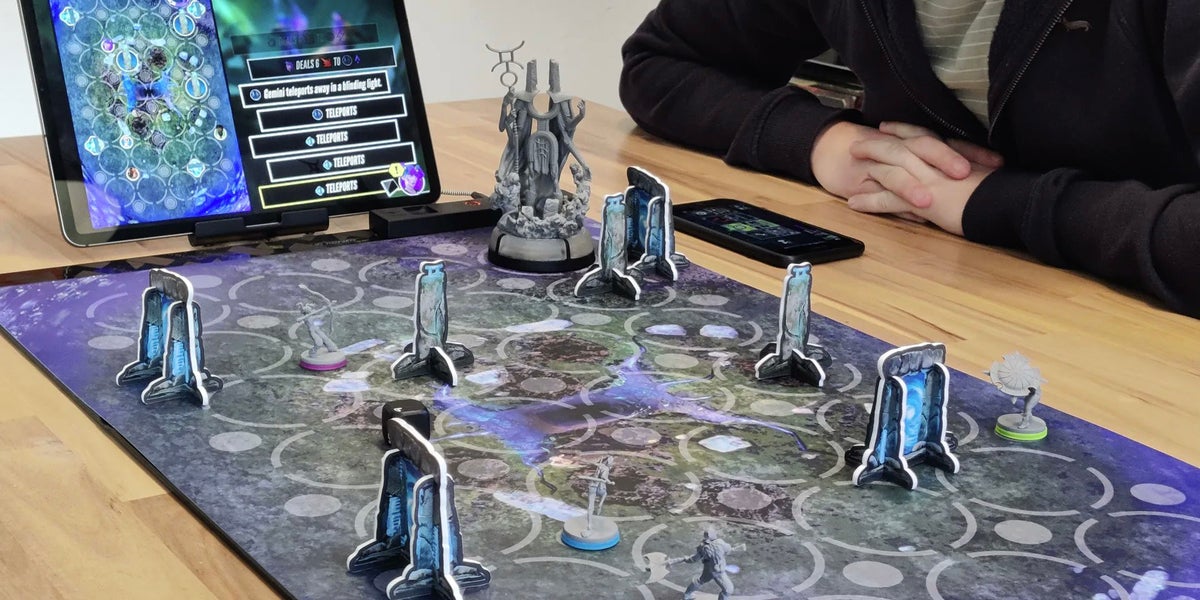
Intelligent opponents are a readily available application of AI in board games. Ludomentor, an app on the Google Play store, is a prime example. Developed by Awaken Realms, it supports their games, including Etherfields, Tainted Grail: The Fall of Avalon, and Lords of Hellas. It’s not a universal solution, limited to games Ludomentor supports, but it demonstrates a functional model.
Ludomentor uses rule-based systems and machine learning. The app 'knows' the rules and uses algorithms to make decisions based on the current game state. It’s not a deep learning AI that's truly 'thinking' strategically, but a sophisticated rules engine that plays according to rules and makes reasonable choices. It won’t outsmart expert players consistently.
The user experience is straightforward. Set up the game as usual, then use the app to manage the AI opponent’s turn. It handles movement to combat, presenting information clearly on your phone or tablet. Its strength is handling the administrative burden of solo play or providing a practice opponent for newcomers. The AI can feel predictable, and its decision-making isn't always optimal. It’s a tool for learning a game, but don’t expect a grandmaster-level challenge.
Accessibility is a plus; the app is available on Android, and Awaken Realms continually adds support for more titles. The 3.8-star rating on the Google Play Store, with 119 reviews as of late 2026, suggests a positive reception, but users note the limitations of the AI's strategic depth. It’s a first step, but AI opponents still have room to grow.
- Games currently supported by Ludomentor: Etherfields, Tainted Grail: The Fall of Avalon, Lords of Hellas
- AI approach: Rule-based systems combined with machine learning
- Strengths: Handles complex rules, good for solo play and learning
- Weaknesses: Predictable decision-making, not a consistently challenging opponent
Featured Products
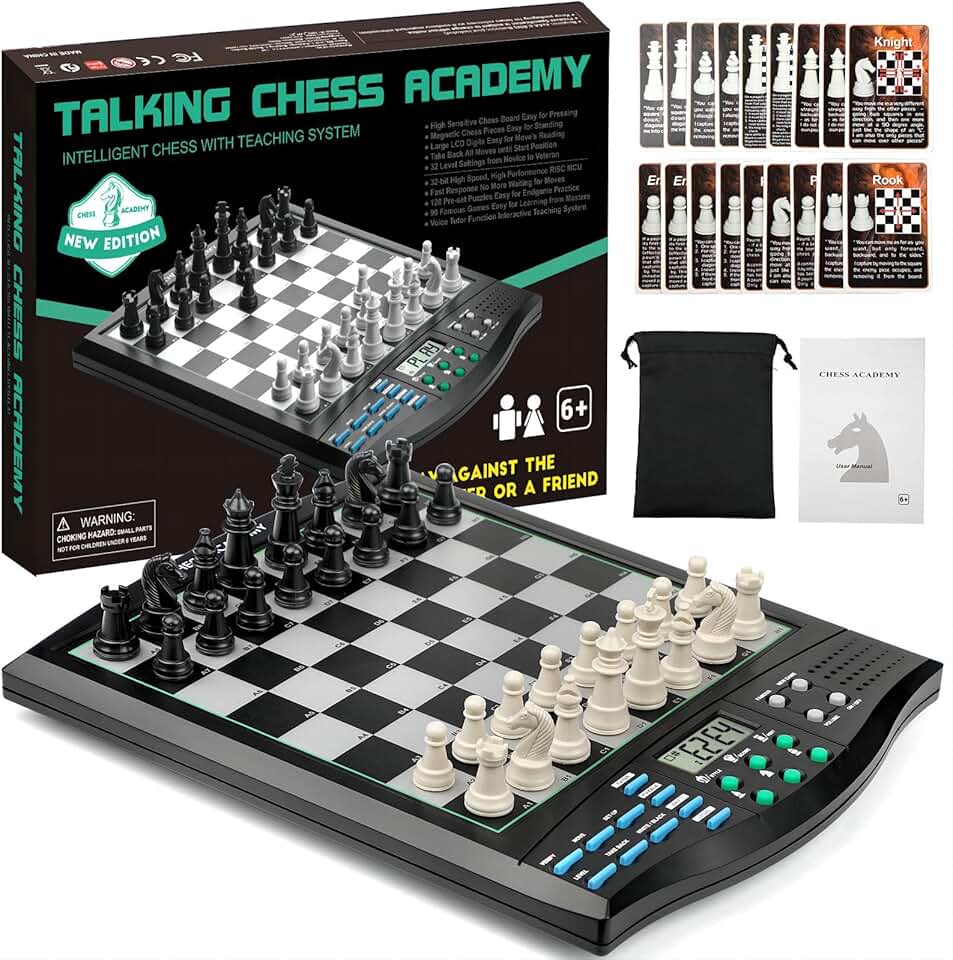
Interactive teaching system for beginners · Advanced AI for improving players · Magnetic pieces and electronic board
This chess set offers a unique blend of traditional gameplay with an AI tutor, making it ideal for learning and improving chess skills.

3D AI-powered gameplay · Integrated referee function · Suitable for solo or two-player games
GiiKER Smart Four brings a classic game into the modern era with AI assistance and a built-in referee, perfect for quick, engaging strategy sessions.

Robotic arm for physical piece movement · 25 AI levels and over 1200 exercises · Voice coaching and Lichess integration
The SenseRobot AI Chess Robot offers an immersive experience with its robotic arm, personalized coaching, and extensive training features for serious chess improvement.

Customizable 4-panel design · Includes inserts for easy organization · Durable construction for tabletop use
While not AI-enhanced, this DM screen is a crucial accessory for Dungeon Masters, providing essential organization and a professional presentation for D&D campaigns.

Cooperative, story-driven gameplay · Based on the popular Mass Effect universe · Designed for 1-4 players with variable playtime
Mass Effect: Priority Hagalaz offers a rich narrative and cooperative strategy experience for fans of the franchise, translating the beloved video game world into a tabletop adventure.
As an Amazon Associate I earn from qualifying purchases. Prices may vary.
Beyond Opponents: AI as Game Master
AI as a game master or storyteller is an exciting application. RPG-style board games like Gloomhaven or Descent, where narrative and player choices are central, can use AI as the dungeon master, managing the unfolding story, generating quests, and adapting to player actions.
Developers are experimenting with this. AI generates unique scenarios based on player characters’ backgrounds, creates dynamic events triggered by specific actions, and adjusts difficulty on the fly. This allows for a personalized and replayable experience, as no two playthroughs are the same. An AI could remember past decisions and weave them into the ongoing narrative.
Technical challenges are significant. Sophisticated natural language processing is required to understand player intentions, and robust algorithms are needed to generate coherent and engaging storylines. Replicating the creativity and improvisation of a skilled human game master is difficult. Early implementations often feel scripted, lacking the spontaneity of a human DM.
This area is in its infancy, but the potential is huge. A well-implemented AI game master could unlock new levels of immersion and replayability in RPG-style board games. It’s a complex undertaking that could fundamentally change how we experience these games.
Content is being updated. Check back soon.
Gamefroot and AI-Driven Game Creation
AI's impact isn’t limited to playing board games; it’s reshaping how we create them. Platforms like Gamefroot empower players to design their own games with AI tools. Gamefroot offers a visual, drag-and-drop interface for game development and increasingly integrates AI features.
Gamefroot’s AI capabilities focus on streamlining the design process. It generates basic game rules based on initial parameters, suggests artwork and assets, and helps with level design. While AI-generated content isn’t always perfect, it provides a starting point for aspiring game designers or a fun way for hobbyists to experiment.
AI is likely not a threat to professional game designers, at least not yet. AI-generated content currently lacks the polish and nuance of a professionally designed game. It is a powerful tool for prototyping and experimentation. It allows designers to quickly test ideas and iterate on designs. It also democratizes game creation, making it accessible to a wider audience.
AI tools will become increasingly sophisticated in the coming years, capable of generating more complex game mechanics and artwork. This could lead to a surge in user-generated content and a blurring of the lines between amateur and professional game design.
The Data Problem: Training AI for Tabletop
A significant challenge in training AI for board games is the lack of readily available data. Unlike video games, which generate vast amounts of gameplay data, board games are typically played offline, with limited opportunities for data collection. This makes training machine learning models difficult.
Developers overcome this challenge in several ways. Rule-based systems, as seen in Ludomentor, don’t require large datasets – they rely on explicitly programmed rules. Others use crowdsourcing to collect gameplay data from human players. Some generate synthetic data – simulating gameplay scenarios to create training data for AI models.
undefinedCertain types of games are easier to train AI for than others. Abstract strategy games, like Chess or Go, with well-defined rules and clear objectives, are relatively straightforward. Games with complex narratives and ambiguous goals, like many RPGs, are much more difficult. The more complex the game, the more data is required to train a competent AI.
Ethical considerations also come into play. If AI is used to generate game content, who owns the copyright? How do we ensure that AI-generated content is fair and unbiased? These are important questions that need to be addressed as AI becomes more prevalent in the board game industry.
Standout Games to Watch in 2026
Several upcoming and recently released games are demonstrating the potential of AI integration. These aren’t necessarily the most popular games, but they are pushing the boundaries of what’s possible. Here are a few that have caught my eye.
Chronicles of Elyria: Echoes of the Past (scheduled for release in late 2026) is an ambitious RPG that uses AI to generate dynamic quests and storylines based on player actions. The AI adapts to your character’s background and choices, creating a truly personalized experience.
Aethelgard: AI Dungeon Master (released Q1 2026) focuses entirely on the AI-as-game-master concept. It uses a large language model to create a fully immersive fantasy world, responding to player commands and improvising storylines on the fly. It’s still somewhat rough around the edges, but the potential is enormous.
Sentient Skies (Kickstarter funded, expected 2027) is a cooperative space exploration game where the AI controls the alien civilization you’re interacting with. The AI’s behavior is unpredictable, forcing players to adapt and strategize in real-time.
Terraforming Mars: AI Expansion (released mid-2026) adds an AI opponent with a more sophisticated strategic approach than previous iterations. It learns from past games and adjusts its tactics accordingly, providing a challenging experience for veteran players.
Mystic Realms: Automated Storyteller (currently in beta) uses AI to generate unique fantasy narratives and challenges. It’s designed to be a collaborative storytelling experience, where players and the AI work together to create a shared world.
Card Conquest: Adaptive AI (early access 2026) is a digital card game that uses machine learning to analyze player strategies and adjust the AI’s deck composition accordingly. This ensures a constantly evolving and challenging gameplay experience.
AI-Enhanced Tabletop Titles
- Gloomhaven: Jaws of the Lion – This cooperative dungeon crawler utilizes a companion app that manages monster behavior, card shuffling, and scenario setup. The AI directs enemy actions based on pre-programmed logic, reducing the burden on a dedicated human game master.
- Root: The Roleplaying Game – Building on the asymmetric warfare of the original, this RPG adaptation incorporates an AI ‘Storyteller’ mode. It dynamically adjusts the narrative based on player choices and in-game events, offering a unique campaign experience each playthrough.
- Mansions of Madness: Second Edition – This horror-themed game uses a digital app to control the investigation. The app acts as a fully-fledged AI game master, revealing clues, controlling monsters, and managing the unfolding mystery based on player actions.
- Detective: A Modern Crime Board Game – The game’s companion website and app offer an AI assistant that analyzes evidence submitted by players. It provides feedback on the validity of leads and suggests potential avenues of investigation, simulating the work of a digital detective.
- Tainted Grail: The Fall of Avalon – This dark fantasy adventure game features an AI-driven campaign director through its companion app. The app adapts the story based on player choices and successes/failures, creating a branching narrative with multiple possible outcomes.
- Too Many Bones – The game’s digital dice rolling app features an ‘AI Gear Forge’ that suggests optimal gear builds for characters based on the current encounter and player playstyle. It analyzes character stats and enemy weaknesses to provide tailored recommendations.
- Destinies – This narrative board game utilizes a digital app to manage the story and characters. The app dynamically generates story events and character interactions based on player choices, offering a highly replayable and personalized experience. The app also handles complex rule interactions.
Accessibility and the Future of Play
AI has the potential to make board games more accessible to a wider range of players, including those with disabilities. AI-powered voice control could allow players with limited mobility to participate fully. Automated rule enforcement could assist players with cognitive impairments. Adaptive difficulty levels could cater to players of all skill levels.
Beyond accessibility, AI can personalize the gaming experience, tailoring the game to individual preferences and learning styles. Imagine an AI that suggests strategies based on your past performance, or recommends games that match your interests. This level of customization could significantly enhance the enjoyment of tabletop gaming.
However, it's important to consider the potential downsides of relying too heavily on AI. Over-reliance on automated rules enforcement could diminish the social aspect of the game, where players traditionally help each other understand the rules. And if AI becomes too dominant, it could stifle creativity and strategic thinking. It’s a balancing act.
The future of board games is likely to be a hybrid one – a blend of physical components, digital technology, and artificial intelligence. The goal isn’t to replace the tactile joy of tabletop gaming, but to enhance it, making it more accessible, engaging, and personalized for everyone.
How comfortable are you playing board games that use AI assistance to enhance gameplay?
AI-enhanced board games are becoming increasingly common in 2026, offering features like adaptive difficulty, intelligent opponents, and real-time game coaching. Whether you are a seasoned tabletop enthusiast or a casual player, we want to know how you feel about smart technology joining your game night. Vote below and share your reasoning in the text box to help our community understand the evolving relationship between traditional tabletop gaming and modern AI technology.
No comments yet. Be the first to share your thoughts!