

15 Educational Board Games for Kids 2026: STEM Learning Made Fun
This roundup identifies 15 educational board games that effectively blend STEM concepts with engaging gameplay for kids. We evaluated each title for durability, age-appropriate complexity, and tangible learning outcomes to help you choose tools that reinforce classroom concepts at home.
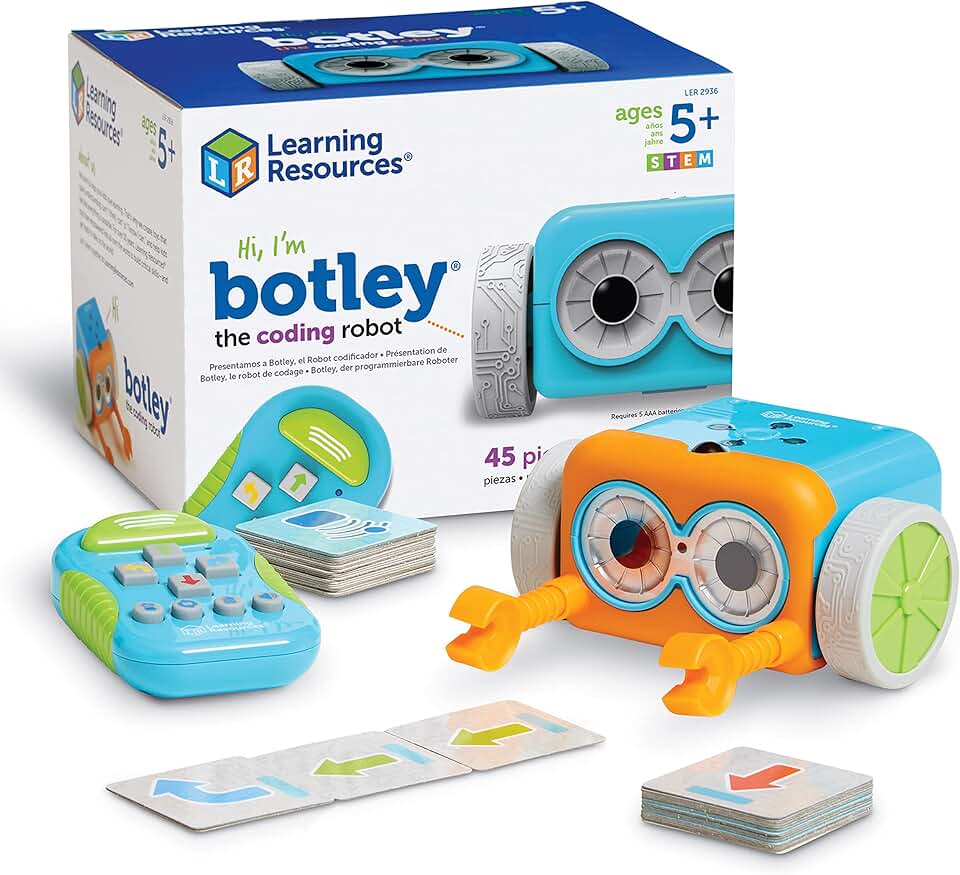
1. robot turing: coding logic without screens
Robot Turing transforms abstract programming concepts into tangible physical movement. Children write simple command cards—move forward, turn left, pick up—to guide the robot to a target. This tactile approach builds foundational computational thinking before they ever touch a keyboard, making it ideal for visual and kinesthetic learners who struggle with screen-based coding apps.
The game scales in difficulty as kids progress from basic navigation to complex obstacle courses. It encourages debugging skills when the robot fails to reach the goal, prompting players to analyze their command sequence for errors. The durable plastic components withstand rough play, ensuring longevity in busy households.
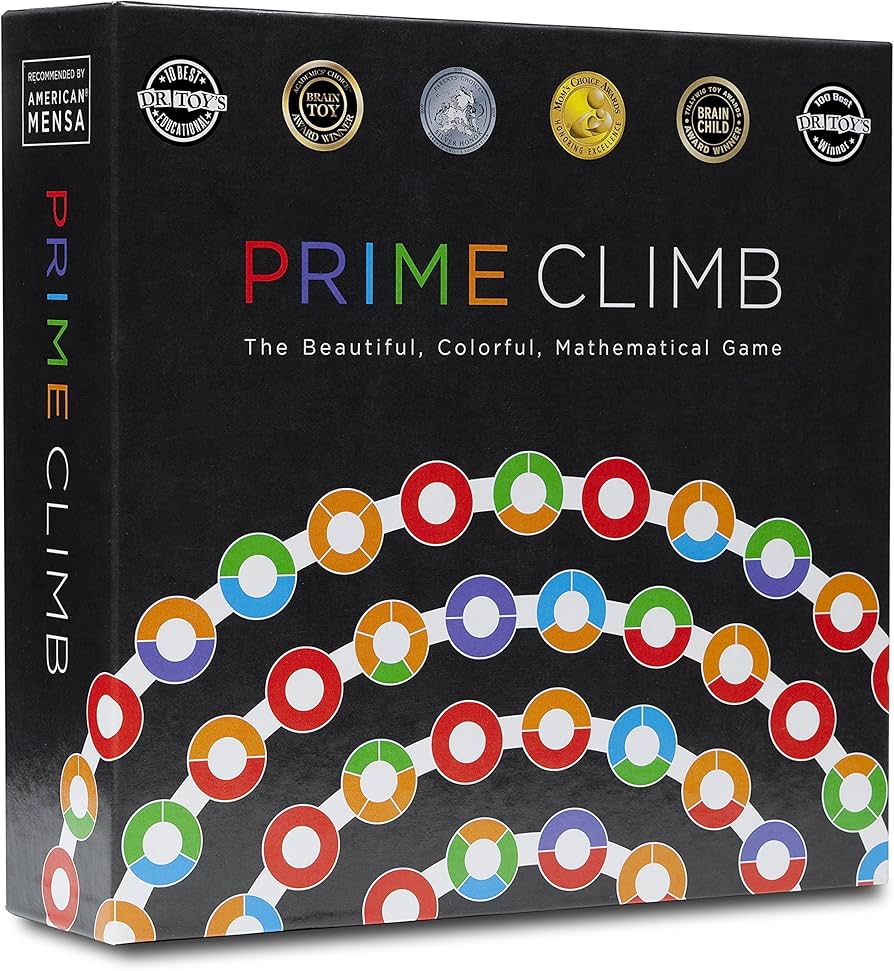
2. prime clime: prime number strategy
Prime Clime merges the strategic depth of Monopoly with mathematical precision. Players move around the board, collecting prime numbers to build their "prime empire." The game requires quick mental arithmetic to determine valid moves and block opponents, turning prime number recognition into a competitive advantage rather than a rote memorization task.
This game shines for older elementary students who need to solidify their understanding of number theory. The tension of deciding whether to claim a high-value prime or block an opponent creates a dynamic learning environment. It effectively bridges the gap between classroom math lessons and real-world strategic application.
3. quantum physics: atomic structure simulation
Quantum Physics challenges players to construct stable atoms by matching protons, neutrons, and electrons. The board represents the periodic table, and players must balance charges and energy levels to create valid elements. This hands-on simulation demystifies abstract scientific concepts by allowing children to physically manipulate atomic components.
The game includes scenarios for isotopes and ions, introducing more advanced chemistry concepts as players advance. It encourages collaborative problem-solving as teams work together to complete complex element sets. The visual design clearly distinguishes between subatomic particles, aiding in long-term retention of atomic structure.

4. circuit mechanics: electrical logic circuits
Circuit Mechanics introduces basic electrical engineering through magnetic circuit building. Players place components like batteries, wires, and light bulbs on a grid to complete functional circuits. The magnetic pieces snap together securely, allowing for quick setup and teardown, which keeps the focus on experimentation rather than fiddly connections.
This game teaches the principles of series and parallel circuits through trial and error. Players learn why a circuit fails if a component is missing or incorrectly placed, fostering an intuitive understanding of electrical flow. It serves as an excellent precursor to more complex electronics kits, building confidence in STEM subjects.

5. logic maze: spatial reasoning puzzles
Logic Maze combines spatial reasoning with logical deduction in a single, compact game. Players navigate a maze by placing tiles to create a continuous path from start to finish. The challenge lies in predicting the path several moves ahead, requiring strong planning and spatial awareness skills.
The game includes over 60 unique challenges that increase in complexity, ensuring replayability. It is particularly effective for developing executive function skills, such as working memory and cognitive flexibility. The portable design makes it easy to take on trips, providing educational entertainment anywhere.

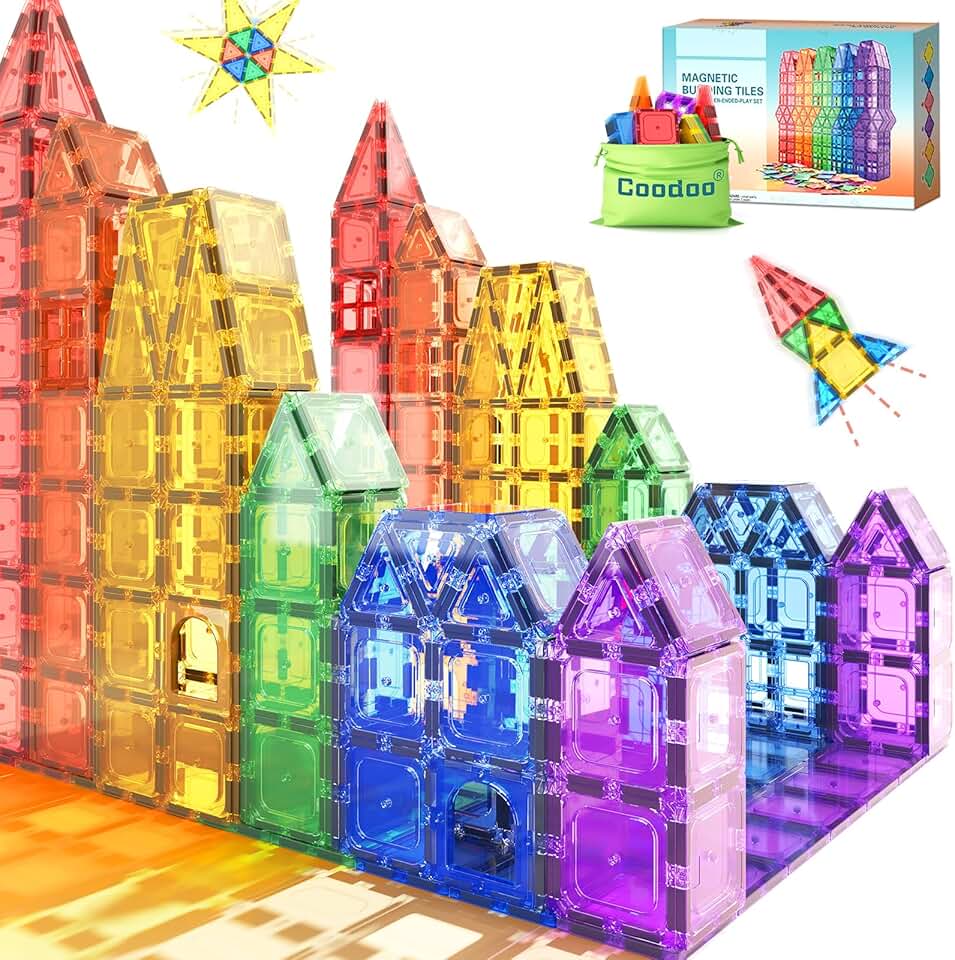
6. quantum physics basics with magnetic tiles
Magnetic building tiles transform abstract spatial reasoning into tactile play. Children stack and connect pieces to understand gravity, balance, and structural integrity without realizing they are practicing engineering principles. This hands-on approach builds a foundational understanding of geometry and physics that textbooks often fail to convey.
The open-ended nature of magnetic tiles encourages iterative design. Kids test hypotheses by adding or removing pieces, learning resilience when structures collapse and celebrating stability when they hold. It is a quiet, focused activity that scales in complexity as the child’s cognitive abilities grow.
7. disco island escape narrative adventure
This game combines storytelling with problem-solving, requiring players to work together to escape an island while managing limited resources. The narrative drive keeps children engaged, while the cooperative mechanic teaches negotiation and strategic planning. Unlike competitive games, there are no losers, which reduces anxiety and encourages collaborative thinking.
Players must discuss options and reach a consensus before making moves, fostering communication skills and empathy. The thematic elements of mystery and adventure make the learning process feel like play rather than study. It is an excellent tool for teaching kids how to articulate their reasoning and listen to others.

8. logic deduction with clue-style mechanics
Deduction games teach children how to eliminate possibilities and use evidence to reach conclusions. By analyzing clues and cross-referencing information, kids practice critical thinking and logical sequencing. This type of gameplay mirrors scientific method processes, where data is gathered and hypotheses are tested against known facts.
The structured nature of deduction games provides a clear framework for learning. Children learn to ask the right questions and interpret answers accurately. This skill transfers directly to academic subjects like math and reading comprehension, where understanding context and details is crucial.
9. pattern recognition with color sorting
Pattern recognition is a core component of mathematical thinking. Games that require sorting, sequencing, or matching colors and shapes help children identify relationships and predict outcomes. This foundational skill is essential for understanding algebraic concepts and coding logic later in life.
These games often involve quick decision-making, which improves cognitive flexibility. Children learn to adapt their strategies when rules change or new patterns emerge. The immediate feedback loop of winning or losing a round reinforces learning and keeps motivation high.

10. resource management with trading mechanics
Trading games teach children the value of resources and the art of negotiation. By managing limited assets and trading with other players, kids learn basic economic principles such as supply, demand, and opportunity cost. These concepts are complex but become intuitive when applied to game mechanics.
The social interaction in trading games is intense and rewarding. Children must advocate for themselves, compromise, and build alliances. This experience builds social intelligence and emotional regulation, as players learn to handle both winning and losing gracefully.

11. The logic-building classic for early elementary
Qwirkle brings tile-matching mechanics to the table, requiring players to connect shapes and colors in a way that mirrors set theory and pattern recognition. It serves as a tactile introduction to combinatorial logic, where children must evaluate multiple options to find the highest-scoring plays. The game scales well, allowing younger kids to focus on simple matching while older players strategize for complex board control.

12. Fine motor skills and color theory for preschoolers
Zingo is essentially a bingo-style game that reinforces vocabulary and visual discrimination through rapid card flipping. The mechanical action of tilting the Zingo! Bingo Blaster teaches hand-eye coordination and fine motor control, while the immediate feedback loop of matching images to words builds early literacy confidence. It is particularly effective for reluctant readers who benefit from visual cues over text-heavy instructions.

13. Spatial reasoning and geometric construction
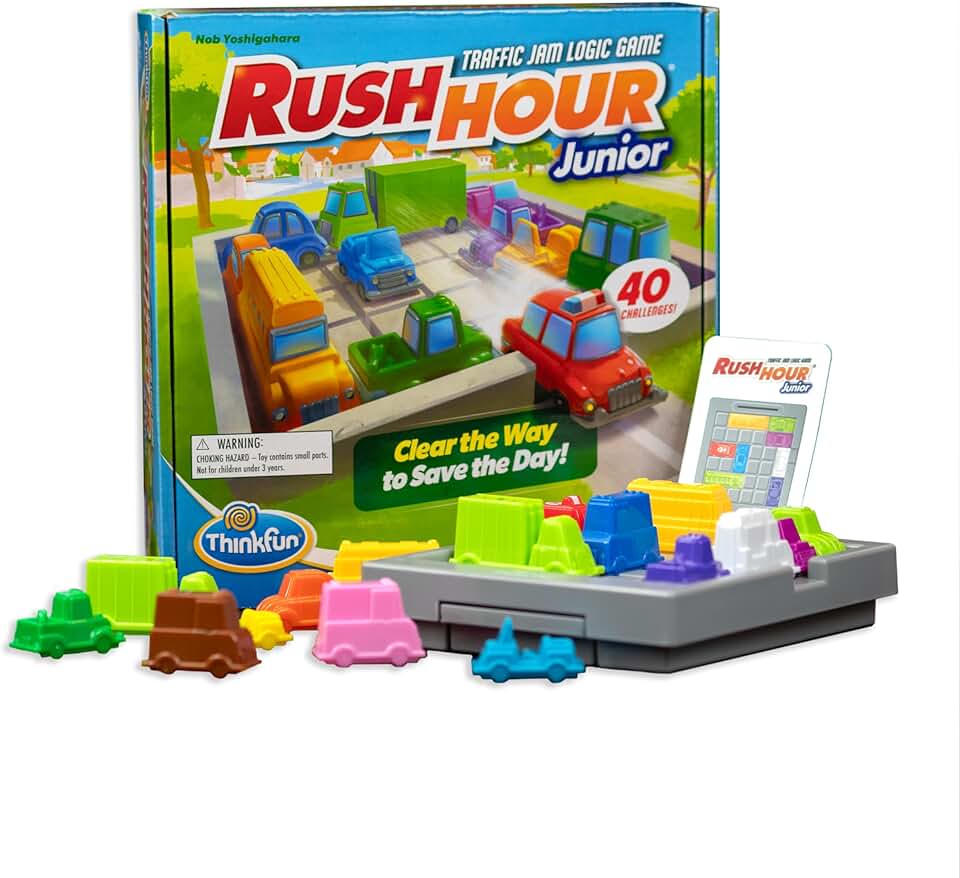
Rush Hour challenges players to navigate a grid of cars and trucks to free a red target vehicle, introducing fundamental concepts of algorithmic thinking and spatial awareness. Each puzzle card presents a unique traffic jam scenario that requires sequential planning and backward reasoning to solve. The game effectively gamifies computational logic without the need for screens, making it a staple for developing problem-solving resilience.

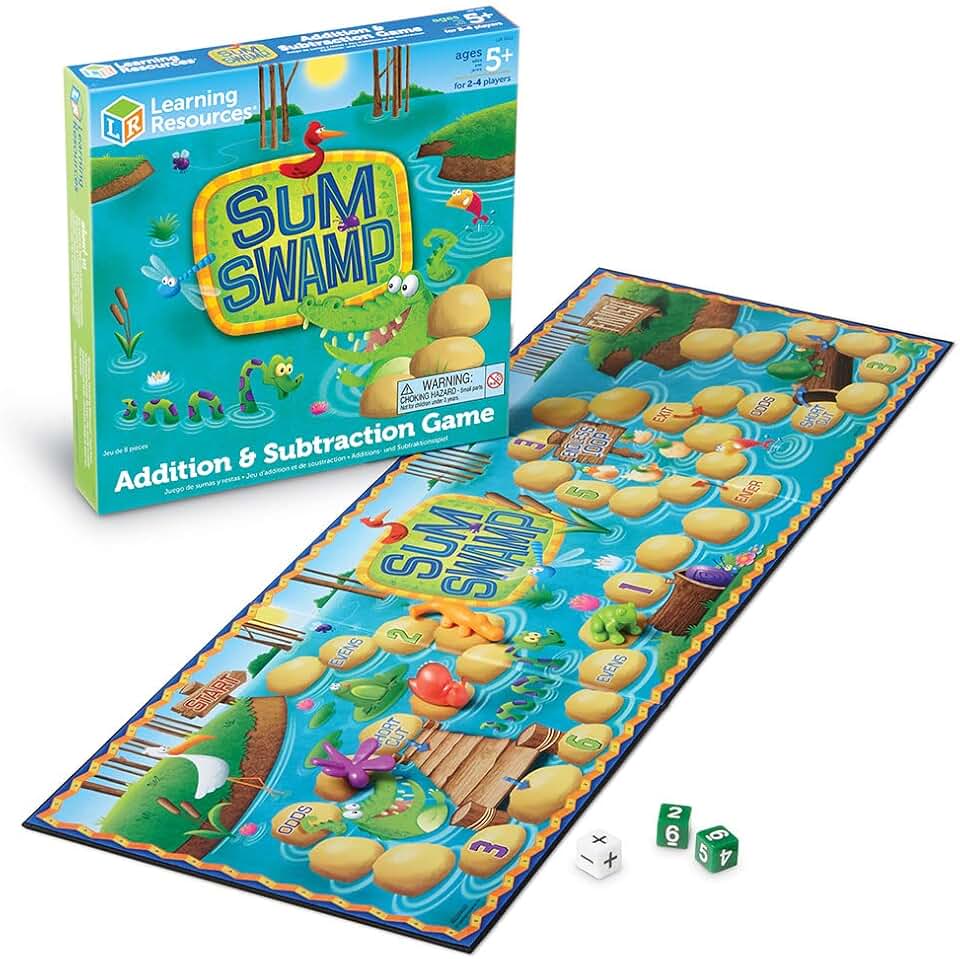
14. Collaborative math and addition practice
Sum Swamp is a board game that turns basic arithmetic into an adventurous journey through a swampy terrain. Players roll dice to determine their movement, but must correctly solve addition or subtraction problems to advance, blending rote memorization with game-based motivation. The cooperative elements often present in family play encourage peer tutoring, where older siblings or parents can guide younger players through tricky calculations.
15. Coding logic and sequencing for beginners
Code Master is a single-player programming puzzle game that teaches the basics of coding logic, such as loops and conditionals, through physical token movement. Players must create a sequence of commands to guide a character to a goal, mirroring the syntax and structure of actual programming languages. It provides a tangible bridge between abstract computational concepts and concrete actions, preparing children for digital literacy in a low-stakes environment.

What to know first
We chose these fifteen educational board games based on how well they teach STEM concepts without feeling like a classroom lesson. The list includes titles for preschoolers learning letters and numbers, as well as games for older kids tackling logic and strategy. We prioritized games that encourage repeated play, as that is where the real learning happens.
Our selection process focused on three main criteria: educational value, replayability, and durability. We looked for games that naturally reinforce skills like pattern recognition, basic arithmetic, and spatial reasoning. We also checked for components that can withstand frequent handling by small hands, ensuring the games last beyond the first few play sessions.
The games range from simple matching activities to complex strategy challenges. You will find options that work well for quiet one-on-one learning as well as lively family game nights. Each title was selected because it balances fun with clear learning outcomes, making it easier for parents to justify screen-free time.
How to choose educational board games for kids
Picking the right board game is less about finding the "best" one and more about matching the game to your child's current interests and developmental stage. A game that feels like a chore to a seven-year-old will be a hit with a five-year-old who is ready for that level of strategy. Use this framework to narrow down the 15 options without getting overwhelmed.

As an Amazon Associate, we may earn from qualifying purchases.
Use these criteria to filter the list. If a game meets two or more of these points, it is likely a strong candidate for your family's game night.
Common questions about educational board games
Choosing the right educational board games for your child often raises specific questions about age appropriateness, learning outcomes, and value. Here are practical answers to the most common queries parents ask when shopping for STEM learning tools.
When evaluating educational board games, prioritize games that adapt to your child’s skill level. A game that is too easy becomes boring, while one that is too hard leads to frustration. The best STEM learning tools feel like play, not work, encouraging your child to return to the table again and again.
No comments yet. Be the first to share your thoughts!