

Beyond Monopoly: AI’s Tabletop Takeover
Board games have been a cornerstone of social interaction and strategic thinking for centuries. From ancient games like Senet and Go to modern classics like Monopoly and Catan, they’ve always offered a space for friendly competition and shared experiences. But the tabletop world is undergoing a quiet revolution, driven by advances in artificial intelligence. This isn’t simply about digitizing existing games; it’s about creating entirely new kinds of gameplay.
For a long time, board games relied purely on player skill, luck of the dice, and the established rules of the game. Now, AI is stepping in to augment these elements, offering adaptive difficulty, dynamic storytelling, and intelligent opponents. We’re seeing games that learn your play style and adjust the challenge accordingly, making each playthrough feel uniquely tailored. It’s a shift from static challenges to experiences that respond and evolve.
The integration of AI isn’t about replacing the social aspect of board games, but enhancing it. It’s about providing a more engaging, personalized, and replayable experience for everyone involved. The games we’ll explore aren’t just about winning; they’re about the journey, the surprises, and the shared moments of discovery. This is a new era for tabletop gaming, one where artificial intelligence is helping us unlock previously unimaginable possibilities.
The Top 7 AI Board Games of 2026
Developers are rapidly expanding the market, experimenting with different ways to incorporate AI into gameplay. Here are seven promising AI-enhanced board games available in 2026, each offering a unique take on the genre.
Chronoscape: This time-traveling adventure game uses AI to generate branching narratives and dynamic quests. Players work together to prevent paradoxes, but the AI constantly adjusts the storyline based on their choices. It's geared toward groups of 2-4 players who enjoy cooperative gameplay and a strong narrative focus. The vibe is 'epic sci-fi adventure with meaningful consequences'.
Aetherium Forge: A worker-placement game where players compete to build the most efficient magical workshop. The AI controls the market prices of resources, dynamically responding to player actions and creating a constantly shifting economic landscape. Best for 1-4 players, it's a strategic challenge for those who enjoy economic simulation. It feels like 'a complex engine-building puzzle'.
RuleMaster: Origins: Developed by the team behind the AI that can learn board game manuals (as demonstrated in a 2023 YouTube video by Tabletop Tastings), this game actually teaches you new board games. It walks you through the rules, offers hints, and even plays as an opponent to help you learn. It's a fantastic option for families or anyone new to the hobby. It’s a good starting point for people who feel intimidated by complex rulebooks.
Mystic Realms: A fantasy RPG-style board game where the AI acts as a Dungeon Master, creating unique encounters and challenges based on player character abilities and choices. It supports 1-4 players and offers a truly immersive role-playing experience. Think 'Dungeons & Dragons, but with an AI gamemaster'.
Terraform Prime: A competitive tile-laying game where players terraform a desolate planet. The AI controls the environmental conditions, creating unpredictable weather patterns and natural disasters that players must adapt to. Designed for 2-4 players, it's a challenging and strategic game for those who enjoy environmental themes. It has a 'tense, strategic feel with a constant sense of urgency'.
Number Knights: This is where we see AI really shine in the educational space. Number Knights is a math-focused game for 2-4 players, where the AI adapts the difficulty of the math problems to each player’s skill level. It’s designed to make learning math fun and engaging, and it's been praised by educators for its personalized approach. It’s less about "gameplay’ and more about ‘learning disguised as a game".
Galactic Traders: A spacefaring trading game where the AI controls the galactic economy and the actions of rival traders. Players must negotiate, strategize, and take risks to become the most successful merchant in the galaxy. It supports 2-5 players and offers a complex and rewarding gameplay experience. It's a great choice for anyone who enjoys economic strategy and galactic themes.
Featured Products

AI-powered integrated referee · 3D strategy gameplay · Suitable for 1-2 players and travel
This AI-enhanced board game offers innovative gameplay and adaptive challenges, bringing a futuristic and engaging experience to your family game nights.

120 skill-building challenges · Travel-friendly case · Suitable for ages 8 and up
This AI-enhanced board game offers innovative gameplay and adaptive challenges, bringing a futuristic and engaging experience to your family game nights.
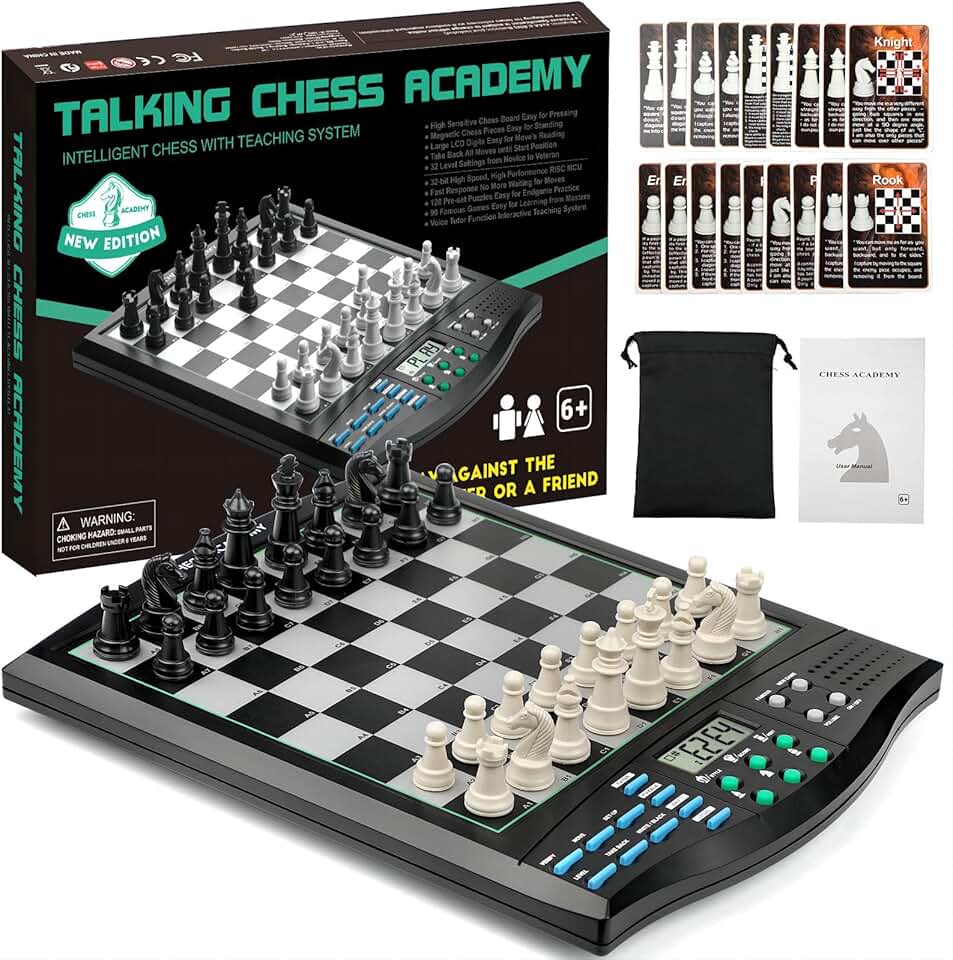
Interactive teaching system · Adaptive AI for all skill levels · Magnetic board
This AI-enhanced board game offers innovative gameplay and adaptive challenges, bringing a futuristic and engaging experience to your family game nights.

Playable on a refrigerator · 2-player word game · Unique interactive concept
This AI-enhanced board game offers innovative gameplay and adaptive challenges, bringing a futuristic and engaging experience to your family game nights.
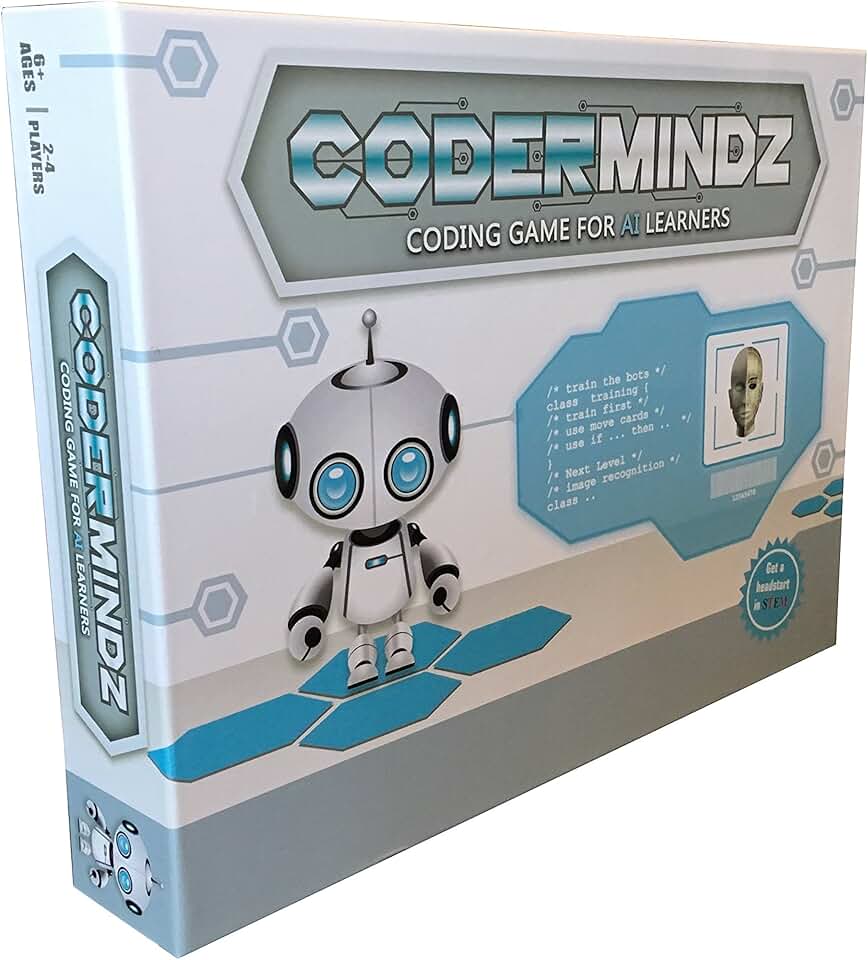
Teaches AI and computer programming · Robot and neural adventure theme · Suitable for ages 6+
This AI-enhanced board game offers innovative gameplay and adaptive challenges, bringing a futuristic and engaging experience to your family game nights.
As an Amazon Associate I earn from qualifying purchases. Prices may vary.
Adaptive Difficulty: Games That Learn You
One of the most significant benefits of AI in board games is the ability to adapt the difficulty to each player’s skill level. This is a departure from traditional board games, where the difficulty is fixed. AI algorithms can track player performance – things like successful strategies, resource management, and reaction time – and adjust the game accordingly.
Games like Number Knights directly exemplify this, tailoring math problems to each child’s abilities. But it's also present in more complex titles. Aetherium Forge, for example, uses AI to subtly manipulate resource prices based on player purchasing habits, making the economic landscape more challenging for experienced players while remaining accessible to newcomers. Chronoscape adjusts the complexity of narrative branches based on player choices and success in overcoming obstacles.
I’m not sure if any games are yet leveraging reinforcement learning to optimize these difficulty curves. It’s a complex undertaking, requiring vast amounts of gameplay data. However, the potential is there to create games that are perfectly balanced for every player, ensuring a consistently engaging and rewarding experience. The goal isn't to make the game easier or harder, but to make it just right for each individual.
Storytelling Reimagined: AI as Dungeon Master
AI is transforming the way stories are told in board games. Traditionally, board game narratives are linear and pre-defined. But with AI, we’re seeing the emergence of dynamic and branching storylines that respond to player choices. Games like Mystic Realms are leading the charge, with AI acting as a virtual Dungeon Master, generating quests, characters, and plot twists on the fly.
This is a significant step beyond traditional board game storytelling. In a typical campaign, the story unfolds along a predetermined path. But with an AI Dungeon Master, the narrative is emergent, meaning it arises from the interaction between the players and the AI. This leads to a much higher degree of replayability, as each playthrough can be dramatically different.
Some developers are even experimenting with large language models (LLMs) to generate more natural and nuanced narratives. The challenge lies in ensuring that the AI-generated content is coherent, engaging, and consistent with the game’s overall theme. It’s a promising area of development, though, and I expect to see even more sophisticated AI storytelling in the years to come.
Educational Gains: AI Tutoring Through Play
The potential for AI in educational board games is substantial. AI can provide personalized feedback and guidance, adapting to a child’s learning style and pace. Games like Number Knights demonstrate this effectively, adjusting the difficulty of math problems based on individual performance. This isn't just about making learning more fun; it's about making it more effective.
The benefit of this approach is that children are learning at their own pace, without the pressure of keeping up with their peers. AI can identify areas where a child is struggling and provide targeted support. It can also offer positive reinforcement and encouragement, building confidence and motivation. This is a significant improvement over traditional educational methods, which often rely on a one-size-fits-all approach.
It's important to note that these games aren't meant to replace traditional learning methods. Rather, they are designed to supplement them, providing a fun and engaging way for children to practice and reinforce what they’ve learned in the classroom. The key is to find games that are both educational and entertaining, so children will actually want to play them.
The Hardware Side: Smart Boards & Companion Apps
AI-enhanced board games rely on a combination of physical components and digital technology. Some games utilize 'smart boards' with built-in sensors and displays, while others rely on companion apps that run on tablets or smartphones. Aetherium Forge, for example, uses a companion app to manage the dynamic market prices, while Chronoscape might use a smart board to track the branching narrative paths.
There are pros and cons to each approach. Smart boards offer a more immersive experience, but they can be expensive and require dedicated hardware. Companion apps are more affordable and accessible, but they rely on players having their own devices. Battery life is also a concern with mobile devices, and connectivity issues can disrupt gameplay.
The choice of hardware often depends on the game’s complexity and target audience. Simpler games may only require a companion app, while more complex games may benefit from a dedicated smart board. As the technology matures, we’re likely to see more integration between physical and digital components, creating a seamless and engaging gameplay experience.
AI-Enhanced Board Game Platforms - 2026 Comparison
| Platform Name | AI Integration Level | Price Range | App Ecosystem | Pros | Cons |
|---|---|---|---|---|---|
| Arcadia Smart Table | Medium | USD $300 - $600 (Table + Basic Game Pack) | Growing, focused on officially licensed titles. Limited indie game support. | Integrated screen and sensors provide automated setup and rule enforcement. AI opponents for solo play. | Relatively high initial cost. Ecosystem reliant on platform’s curated game selection. |
| BoardGameBot AI (Companion App) | Low | Free (with in-app purchases for additional AI personalities/games) | Extensive, supports a vast library of traditional board games via user-created rulesets and AI profiles. | Highly adaptable to existing board game collections. AI provides a challenging opponent for many games. | Requires manual setup and input of game state. AI quality varies depending on user-created profiles. |
| Digital Dungeon Master (Modular System) | High | USD $150 - $400 (Core Module + Expansion Packs) | Open, allows for community-created content and AI modules. Strong focus on RPG-style board games. | Advanced AI Dungeon Master adapts to player choices and creates dynamic narratives. Highly customizable. | Steeper learning curve for module creation. Requires significant setup time for complex scenarios. |
| Smart Meeples (Sensor & App Combo) | Low | USD $80 - $120 (Starter Set including 4 Smart Meeples) | Limited, primarily supports games specifically designed for the system. | Automates scorekeeping and basic game logic. Provides a digital overlay for enhanced gameplay. | Limited game compatibility. AI functionality is basic, primarily focused on automation. |
| HexaBoard AI | Medium | USD $250 - $500 (Table + Software Subscription) | Developing, partnerships with smaller game publishers to create AI-enhanced versions of their titles. | AI assists with complex rule calculations and offers strategic suggestions. Interactive tutorial mode. | Subscription model for full AI functionality. Game library is currently limited. |
| TableTop AI Companion | Low | Free (Premium features available via subscription) | Broad, supports rule customization and community-shared AI behavior scripts. | Open source and highly customizable. Can be used with a wide range of board games. | Requires technical expertise to set up and configure. AI behavior quality depends on user contributions. |
Illustrative comparison based on the article research brief. Verify current pricing, limits, and product details in the official docs before relying on it.
Beyond the Box: Future Trends
The future of AI-enhanced board games is full of possibilities. We can expect to see more integration with virtual and augmented reality, creating even more immersive and interactive experiences. Imagine playing a game where the board comes to life on your tabletop, or where virtual characters interact with you in real-time.
I also anticipate the emergence of entirely new game genres that are only possible with AI. Perhaps we’ll see games that generate unique puzzles based on player skill, or games that simulate complex ecosystems with emergent behavior. The possibilities are truly limitless. However, there are challenges to overcome.
The cost of hardware and the need for robust AI algorithms are significant hurdles. Ensuring that AI-generated content is fair, balanced, and engaging is also crucial. But despite these challenges, I’m optimistic about the future of AI-enhanced board games. They have the potential to revolutionize the tabletop gaming experience, making it more accessible, engaging, and rewarding for players of all ages.



No comments yet. Be the first to share your thoughts!