

Beyond Dice Rolls: AI Enters Tabletop
Board games are popular again. After years of being overshadowed by video games, people are rediscovering the joy of gathering around a table, sharing stories, and competing face-to-face. Players want new experiences, deeper immersion, and more dynamic gameplay. This demand meets a technological leap – artificial intelligence is now accessible enough to meaningfully impact tabletop gaming.
Previously, 'AI' in board games meant a digital app or a simple automated opponent. Now, developers are integrating AI directly into core game mechanics, creating experiences that respond intelligently to player actions. This augments traditional gameplay, adding layers of complexity and unpredictability that were impossible before.
Several factors are driving this change. AI development tools are cheaper, making them available to smaller studios and independent designers. Processing power has increased, allowing more sophisticated AI algorithms to run on available hardware. The gaming community is also more receptive to experimentation. People want to see what's possible.
Adaptive Difficulty & Dynamic Storytelling
AI offers adaptive difficulty in board games. Traditional games have a fixed challenge level, which can be boring if too easy or frustrating if too hard. AI assesses player skill and adjusts complexity on the fly. A game could increase obstacles when you're winning or offer hints when you're struggling, creating a consistently engaging experience for all players.
AI also enables dynamic storytelling. Many board games have pre-written narratives that limit replayability. AI can analyze player decisions and generate branching storylines, unexpected events, and unique challenges. The game world reacts to player actions in a believable and meaningful way.
This shift toward dynamic narratives blurs the line between board games and interactive fiction. Games focus more on experiencing a unique story that unfolds with each playthrough, boosting replayability and creating a deeper emotional connection.
For example, a detective game could have AI generate new clues and suspects based on your investigation. A fantasy adventure could have AI craft quests tailored to your character’s strengths and weaknesses. These are the experiences AI-powered board games are starting to deliver.
- Personalized Challenges: AI adjusts difficulty based on player performance.
- Branching Narratives: Stories evolve based on player choices.
- Increased Replayability: Dynamic content keeps each game fresh.
- Immersive Experiences: AI creates a more engaging and believable game world.
AI-Enhanced Game Mechanics
- Opponent AI - Adaptive AI opponents learn player strategies and adjust their gameplay accordingly, providing a consistently challenging experience. Games like Nemesis already feature challenging AI, and future iterations could dynamically alter AI behavior based on player skill.
- Resource Management - AI can dynamically adjust the scarcity or abundance of resources based on player performance, preventing runaway leaders or ensuring struggling players remain engaged. This could be seen in games similar to Terraforming Mars, where resource availability shifts with difficulty.
- Event Frequency - AI can modulate the frequency and severity of random events. A skilled player might face more frequent, impactful challenges, while a new player could experience a gentler introduction. Games like Pandemic could benefit from this, scaling outbreaks based on team competence.
- Puzzle Complexity - In cooperative puzzle games, AI can tailor the difficulty of puzzles to the group’s problem-solving abilities. This is applicable to games like Exit: The Game series, where puzzle generation could become more sophisticated.
- Hidden Information - AI can subtly adjust the quality or quantity of hidden information available to players, creating a more balanced and engaging experience. This could be implemented in social deduction games like Avalon, influencing the information given to the spies.
- Narrative Branching - AI can dynamically alter the storyline of a game based on player choices and successes/failures, creating a truly personalized narrative experience. Games like Gloomhaven: Jaws of the Lion could see more complex and reactive story arcs.
- Variable Game Length - AI can monitor player engagement and adjust the game's length accordingly. A quick, decisive victory for skilled players, or a longer, more drawn-out game for those who prefer a more relaxed pace. This could be useful for games like 7 Wonders.
AI as Game Master: Solo Play Reimagined
Solo board gaming is popular but often lacks the dynamic interaction of multiplayer games. AI can act as a Game Master, controlling opponents, generating quests, and reacting to your actions in ways a static rulebook can't. This creates a truly unpredictable adversary.
An AI Game Master can introduce unexpected twists, adapt to your strategies, and learn your playstyle. This creates immersion and challenge difficult to achieve with traditional solo modes. The game feels less like playing against rules and more like a dynamic contest with a thinking opponent.
AI could generate unique scenarios, manage resources, and provide commentary on your decisions. This makes solo play more engaging and rewarding.
The Rise of 'Living' Board Games
AI integration extends beyond the tabletop. 'Living' board games use companion apps and ongoing AI integration to offer evolving rules, persistent narratives, or connections to real-world events.
Imagine a mystery game where new clues are revealed through a companion app based on the time of day or current events. Or a strategy game where the game board changes based on data from a connected online community. This blurring of lines between the physical and digital realms creates a unique and compelling gaming experience.
These 'living' games can foster community. Players share experiences, contribute to evolving narratives, and collaborate on challenges. This creates a shared experience beyond a single play session, building a fanbase and increasing longevity.
Events can unfold over weeks or months, with player actions influencing the narrative. This concept creates an ongoing, evolving world beyond a single game session.
- Early 2024: First companion apps begin offering limited AI integration (e.g., automated setup, rule clarifications).
- Mid-2025: Games start incorporating AI-driven event triggers based on in-game actions.
- Late 2025: Persistent narratives emerge, with player choices impacting long-term game state.
- 2026 and Beyond: Integration with real-world data and community-driven storylines becomes more common.
Current Examples: Games Leading the Charge
Several games are pushing the boundaries of AI-powered tabletop gaming. Nemesis, a cooperative survival game, uses an AI system to control the alien threat. The AI adapts its behavior based on player actions, creating a terrifying and unpredictable experience. Players report no two games are ever the same.
Mage Knight Board Game has a solo mode that, while not strictly AI-driven, is dynamic and challenging. Its complex ruleset and variable setup offer high replayability, and AI-controlled enemies present a formidable challenge, demanding strategic thinking and careful planning.
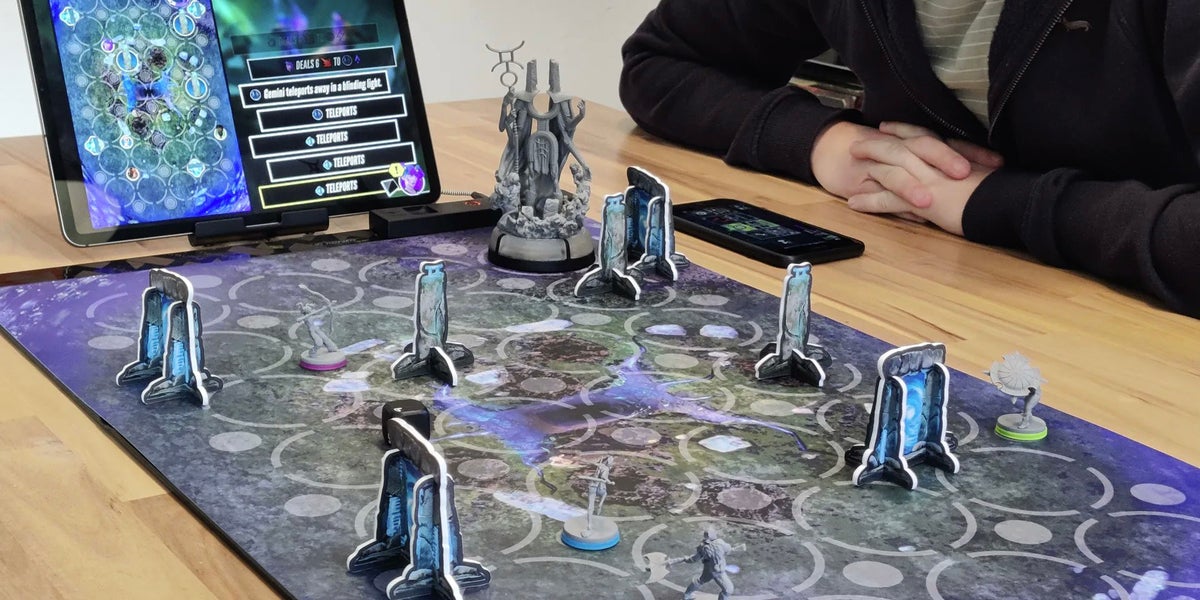
Comanauts is a legacy game that uses a companion app to manage narrative and AI opponents. The app provides sound effects, narrates story events, and controls enemy actions. This integration enhances immersion and creates a cinematic gaming experience.
Spirit Island is a cooperative game where players defend their island from invaders. While invaders follow rules, the game’s complexity and variable setup create a dynamic and challenging experience. Different spirit combinations and adversary cards lead to different gameplay scenarios.
Too Many Bones uses a unique dice-based combat system and features enemies with distinct behaviors. The game encourages strategic thinking and careful
Oathsworn: Into the Deepwood relies on a companion app to manage the game’s complex narrative and AI-controlled enemies. The app provides atmospheric sound effects, narrates story events, and tracks player progress. The game’s immersive world and branching storyline create a truly unique gaming experience.
Challenges & Considerations
Despite the excitement, several challenges remain. Developing AI-powered board games is significantly more expensive than creating traditional games. It requires specialized expertise in AI programming, data science, and game design. This cost can be a barrier to entry for smaller studios and independent designers.
Bugs and glitches are also a concern. AI algorithms can be complex and unpredictable, and even minor errors can disrupt the gameplay experience. Thorough testing and quality assurance are essential, but even then, unexpected issues can arise. The 'black box' nature of some AI algorithms—where it’s difficult to understand why the AI made a particular decision—can make debugging particularly challenging.
Balancing AI assistance with player agency is another key consideration. Players don’t want to feel like the AI is playing the game for them. The AI should enhance the experience, not replace it. It’s a delicate balance that requires careful design and playtesting.
Data privacy is also a valid concern, particularly for games that collect player data to personalize the experience. Developers need to be transparent about how they’re using this data and ensure that it’s protected from unauthorized access.
Tools for Creators: AI-Assisted Game Design
The good news is that tools are emerging to help game designers overcome these challenges. AI-powered level generators can automatically create complex and varied game boards, saving designers countless hours of manual work. Character creation tools can generate unique characters with distinct personalities and backstories.
Playtesting assistants can analyze player behavior and provide valuable insights into game balance and design flaws. These tools can help designers identify areas where the game is too easy, too hard, or simply not engaging. Several platforms now offer AI-driven playtesting services, providing automated feedback and suggestions.
While these tools are still in their early stages of development, they have the potential to revolutionize the game design process. They can empower indie developers to create more ambitious and innovative games, and they can help established studios streamline their workflows and reduce development costs. Tabletop Club, for example, provides tools for managing and playing tabletop games online, and is exploring ways to integrate AI into its platform according to documentation from docs.tabletopclub.net (v0.1.4).
- Level Generators: Automatically create game boards and maps.
- Character Creators: Generate unique characters with distinct traits.
- Playtesting Assistants: Analyze player behavior and provide feedback.
- Narrative Generators: Assist with writing branching storylines.
No comments yet. Be the first to share your thoughts!